
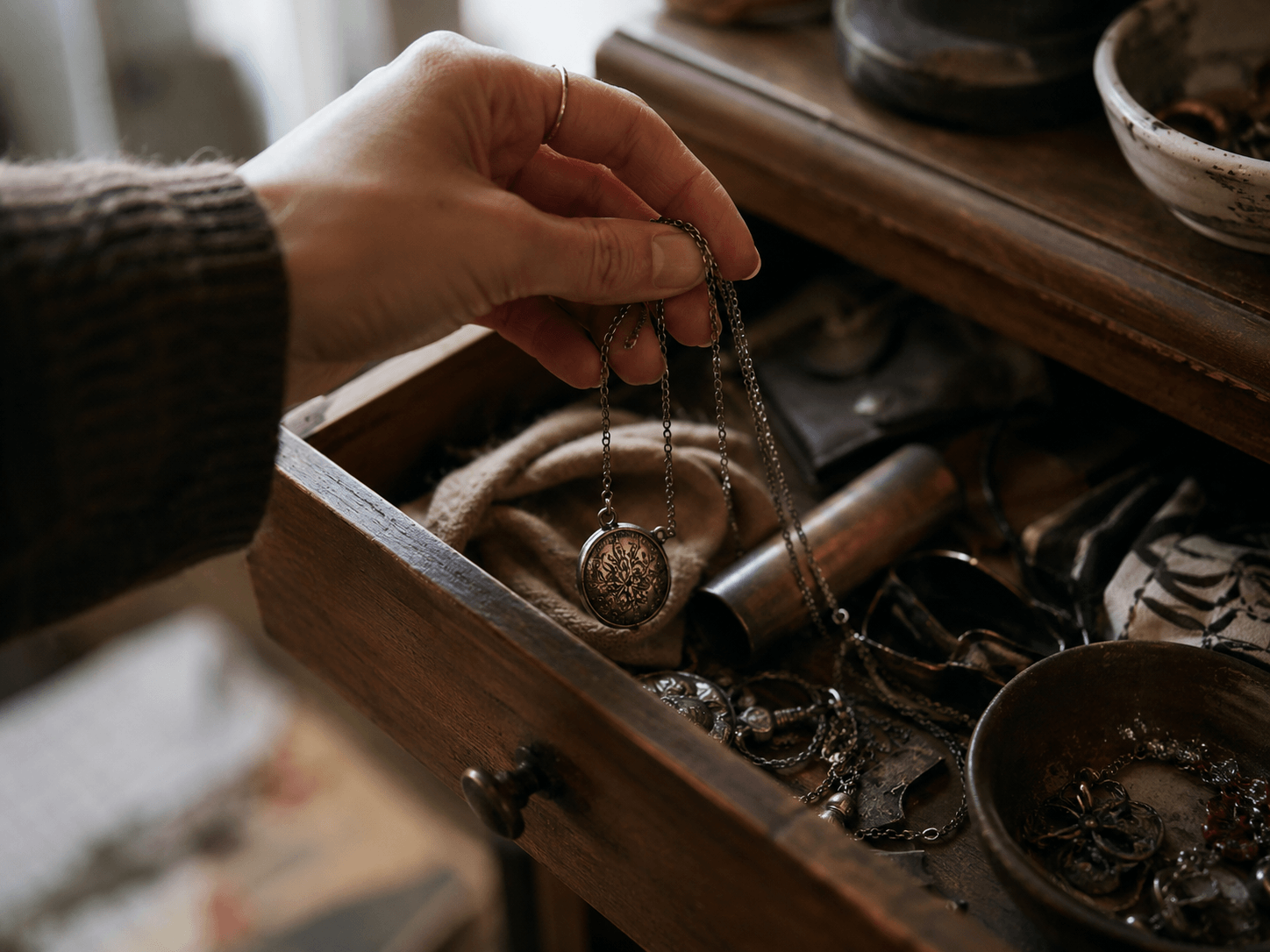
You know that feeling. You’re hunting through a drawer, looking for something to wear, and your fingers land on a necklace you completely forgot about. You pull it out hopeful — and your heart drops a little. What was once bright and beautiful is now dull, dark, or streaked with something greenish that should not be there. It’s not broken. It’s not dirty, exactly. But it’s tarnished — and if you don’t know why jewellery tarnishes, you have no idea whether it’s fixable or just finished.
That moment used to happen to me constantly before I understood what was actually going on. So let’s fix that today. By the end of this, you’ll know exactly why does jewellery tarnish, which metals are worth your money, and how to prevent jewellery tarnishing before it starts.
What Actually Happens When Jewellery Tarnishes
Here’s the plain-English science, because it’s actually fascinating once you see it.
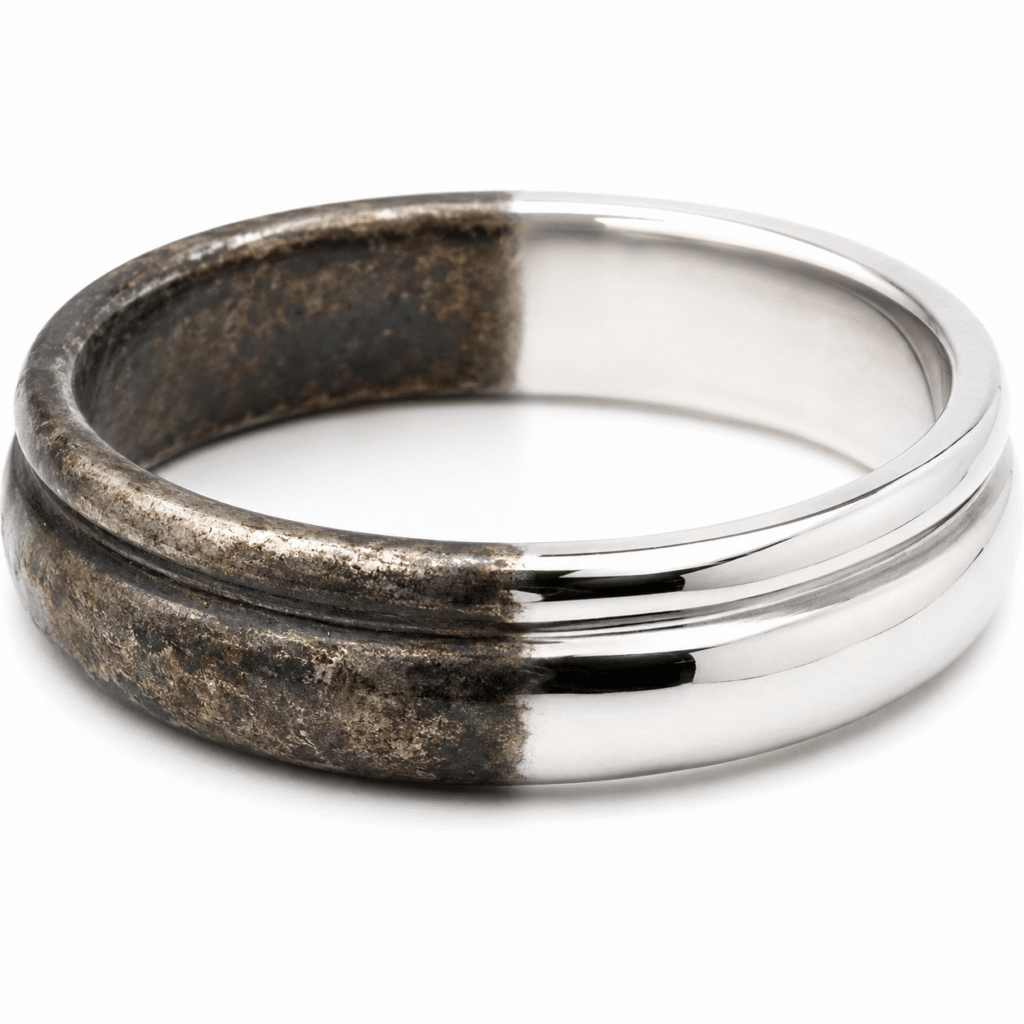
The metal in your jewelry (or jewellery, depending on which side of the Atlantic you’re on) isn’t just sitting there passively. It’s constantly reacting with the world around it — the air, moisture, your skin, everything it touches. When certain metals meet oxygen and sulphur compounds in the air, they bond together and form a new layer on the surface. That layer is what you see as tarnish: the dark film, the dullness, the patchy discoloration.
The proper word for this is oxidation — the same process that turns a cut apple brown or makes iron go rusty. But unlike rust, which eats through metal, tarnish is mostly a surface problem. That’s good news, because it means most tarnished jewelry is absolutely reversible if you catch it in time.
Silver tarnishes fastest because it reacts strongly with sulphur in the air. Base metals like copper and brass tarnish and can leave green marks on your skin — that’s copper reacting with your sweat and turning into copper salts, which aren’t harmful but are deeply annoying. Gold itself barely tarnishes at all, which is why people have been obsessed with it for thousands of years. The problem is most “gold” jewelry isn’t solid gold, and that changes everything.
The Metals Ranked — Which Last Longest
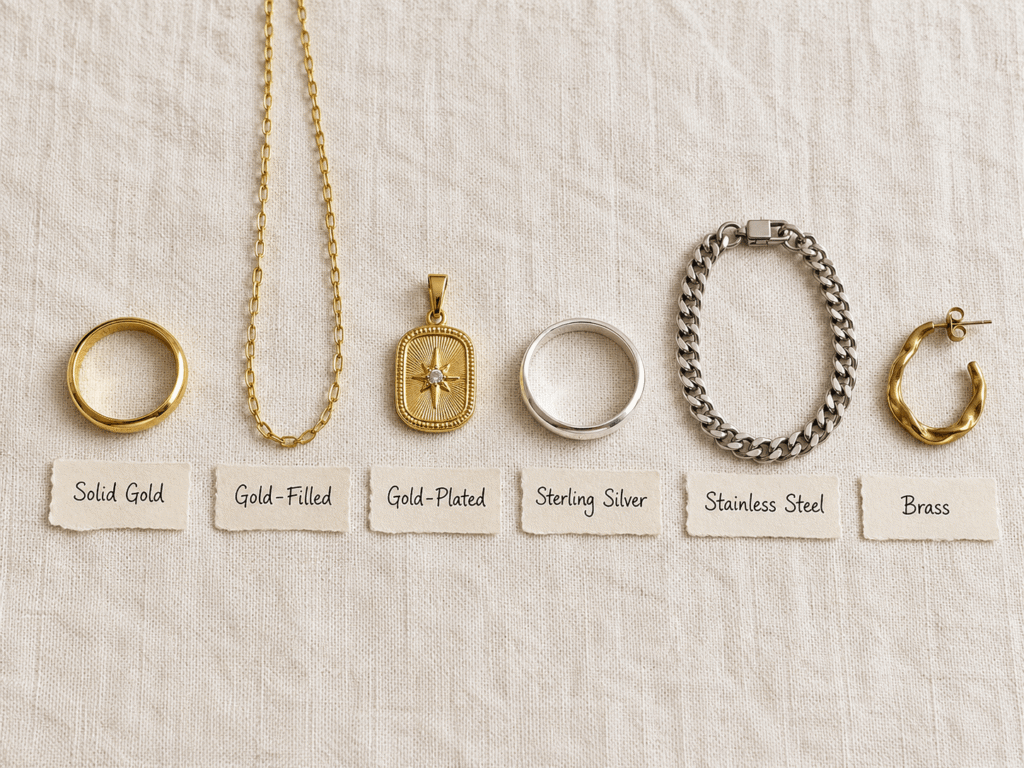
Solid gold (9ct, 14ct, 18ct, 24ct): The most tarnish-resistant option you can buy. The higher the carat, the purer the gold, and the less it will react with anything — 18ct solid gold worn daily can look the same in 20 years as the day you bought it.
Gold-filled: A thick layer of real gold mechanically bonded to a base metal core, making up at least 5% of the item’s total weight. It lasts years with basic care, won’t flake, and is a genuinely good mid-range option — this is often the sweet spot for jewelry that doesn’t tarnish noticeably.
Gold-plated: A very thin layer of gold electroplated over a base metal, which is where most affordable jewelry lives. I ruined a beautiful gold-plated necklace within a week before I understood this — I’d been spraying perfume directly onto it and showering with it on, and the plating rubbed clean off within days, leaving a dull brassy finish underneath.
Sterling silver: 92.5% pure silver, and genuinely beautiful — but it does tarnish, especially if you live somewhere humid or wear it against skin products. The upside is it cleans up easily, and proper storage slows tarnishing dramatically.
Stainless steel: Underrated and genuinely tough. It’s resistant to moisture, sweat, and most chemicals, which makes it brilliant for everyday pieces like rings and bracelets that take a beating. It won’t tarnish the way plated metals do.
Fashion metals (zinc alloy, copper, brass, mystery metal): These are typically what you find in very cheap jewelry. They tarnish quickly, can turn your skin green, and generally won’t survive more than a season of regular wear. Buy them for what they are — fun, temporary, low-commitment.
The 5 Things Speeding Up Tarnishing You Probably Don’t Think About
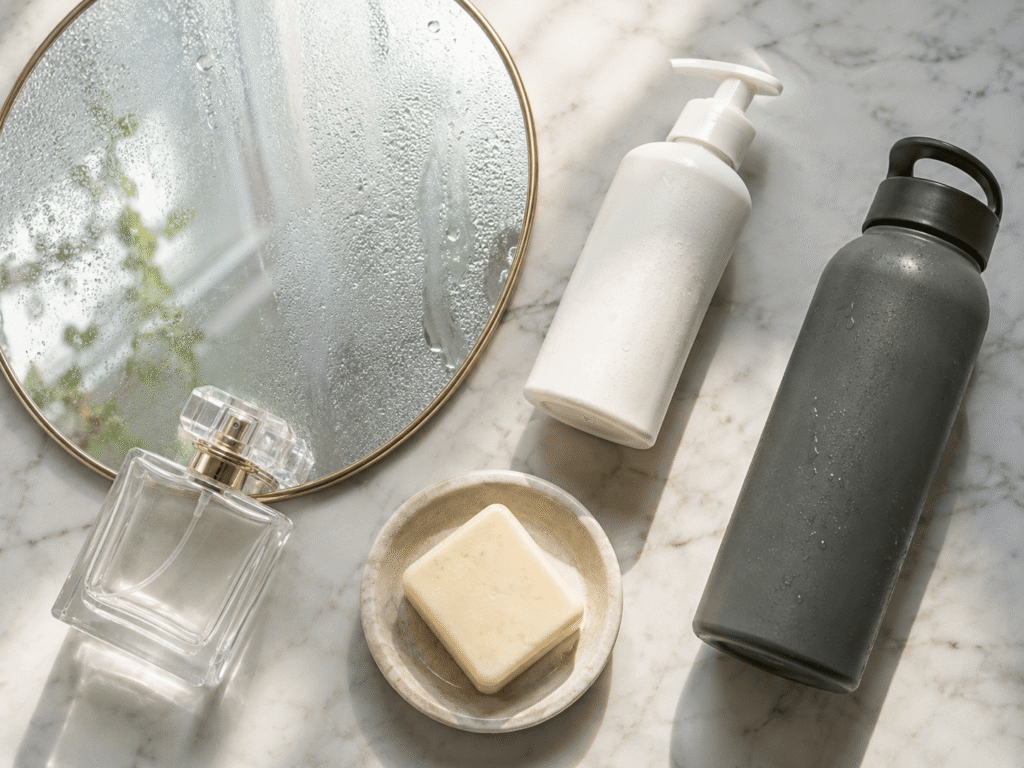
Perfume: Most fragrances contain alcohol and other chemicals that are genuinely harsh on metal finishes. Spraying perfume while you’re wearing your necklace — or onto your wrists and then immediately putting on bracelets — accelerates tarnishing significantly. Spray first, let it dry, then put jewelry on.
Lotion and skincare: That lovely moisturizer sitting on your skin creates a barrier between your jewelry and the air, but it also introduces chemicals that react with metal. Hand cream is particularly damaging to rings — it works into the setting and coating and breaks it down over time.
Sweat: Your sweat is mildly acidic and contains salts that react with metals, especially copper-based alloys. Hot days, workouts, and even nervous situations accelerate this — if you know you’re going to sweat, take off anything plated or silver before you do.
Humidity: Moisture in the air is a major driver of tarnishing, which is why jewelry stored in bathrooms (where most people keep it) tarnishes faster than jewelry stored in a bedroom. The steam from showers and baths is constantly settling on your pieces and accelerating that surface reaction.
Soap: You’d think soap would clean jewelry, but it does the opposite when it’s not rinsed off properly. Soap residue traps moisture against the metal, dulls the finish, and over time contributes to tarnishing. Always take rings off before washing up — or at minimum rinse thoroughly.
How to Store Jewellery So It Lasts
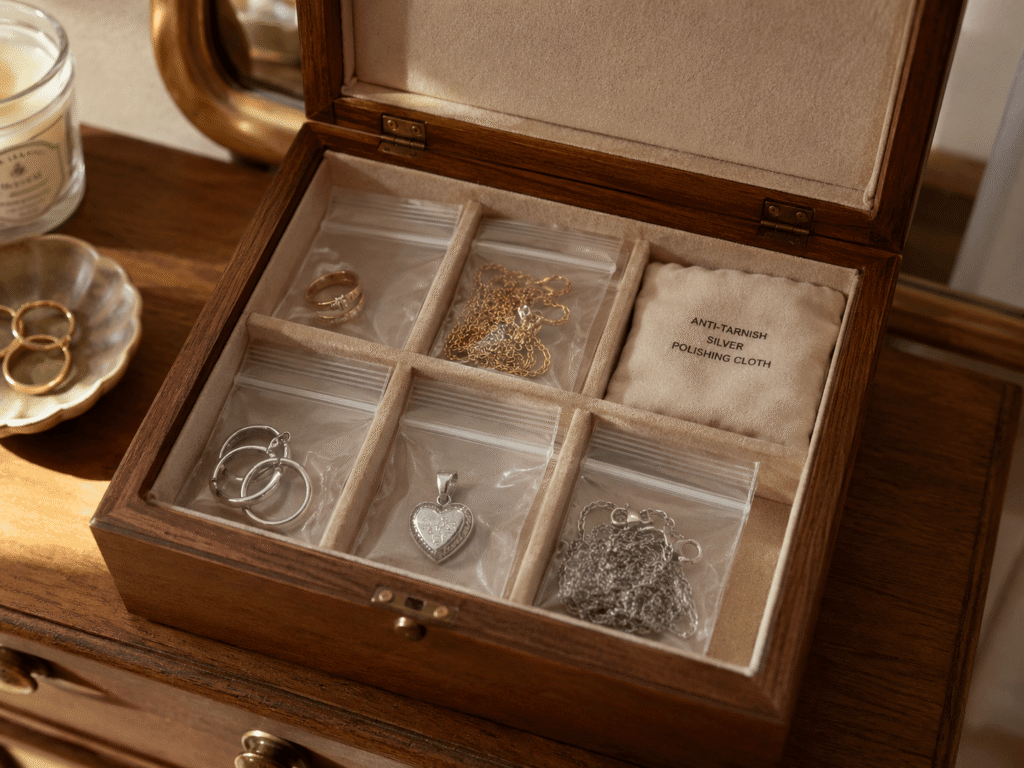
Storage is where most people lose the battle before they’ve even started. The worst thing you can do is leave jewelry out on a tray on your bathroom shelf, tangled together, exposed to steam and air. My grandmother’s rule was always to wrap each piece individually in a small square of soft cloth before putting it away — and her jewelry from the 1960s still looks immaculate.
You want to keep pieces in an airtight or near-airtight environment, away from humidity and light. Individual zip-lock bags are genuinely excellent for this — cheap, practical, and they limit the air exposure that causes tarnishing. Anti-tarnish strips (small paper strips you put in the bag or box) absorb sulphur from the air and can dramatically extend how long your silver and plated pieces stay bright.
Keep jewelry in your bedroom, not your bathroom. Store pieces separately so they’re not scratching each other. And if you have solid silver pieces you wear rarely, a proper anti-tarnish cloth pouch is worth every penny.
How to Clean Tarnished Jewellery at Home — Step by Step
Before you throw anything away, try this. Most tarnish — even dark, stubborn tarnish — responds well to simple home cleaning.
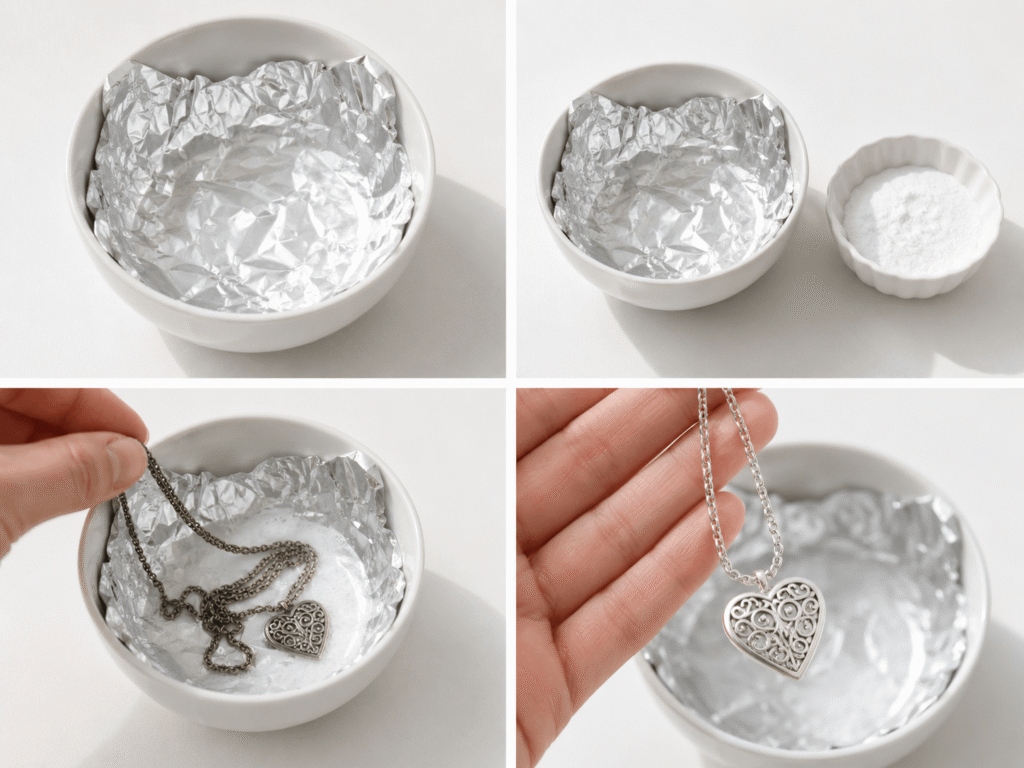
For silver and silver-toned jewelry: Line a bowl with aluminium foil (shiny side up). Add hot water and a tablespoon of baking soda — it will fizz slightly. Place your jewelry in the bowl so it touches the foil. Leave it for five to ten minutes. The tarnish transfers to the foil through a chemical reaction, not scrubbing. Rinse well, pat dry with a soft cloth, and let it air dry completely before storing.
For gold-plated pieces: Do not use baking soda or anything abrasive — you’ll strip the plating. Instead, mix a tiny drop of dish soap with warm (not hot) water. Use a very soft toothbrush or a cotton pad and work gently in small circles. Rinse thoroughly and pat dry immediately. Never soak plated pieces for extended periods.
For stainless steel: Warm soapy water and a soft cloth is almost always enough. Stainless steel is forgiving — it’s one of the easiest metals to keep clean.
What to avoid across the board: toothpaste (too abrasive), bleach, harsh chemical cleaners, and ultrasonic cleaners for plated or gemstone pieces. And always make sure jewelry is completely dry before you store it — moisture trapped against metal is how tarnish starts again.
The One Rule That Makes the Biggest Difference
If you take nothing else from this post, take this: put your jewelry on last, take it off first.
Last thing before you leave the house — after makeup, skincare, perfume, hairspray. First thing when you get home — before washing your hands, before the gym, before cooking. This single habit removes more tarnish risk than almost anything else because it limits your jewelry’s exposure to every product and activity that accelerates the process.
It sounds simple because it is. But it took me years of ruined pieces to actually make it a habit, and the difference has been genuinely significant.
The encouraging truth is that most tarnish is not the end of a piece — it’s just a signal that it needs some attention. The back-of-drawer necklace that broke your heart when you found it? There’s a very good chance it cleans up beautifully with fifteen minutes and things you already have at home.
Understanding why jewelry tarnishes changes how you shop, how you store, and how you care for every piece you own. Jewellery that doesn’t tarnish does exist — solid gold and stainless steel will genuinely last — but even the more affordable pieces in your collection can last years longer than you’d expect if you treat them with a little more intention.
Your jewelry is worth that small effort. Go rescue that necklace.