

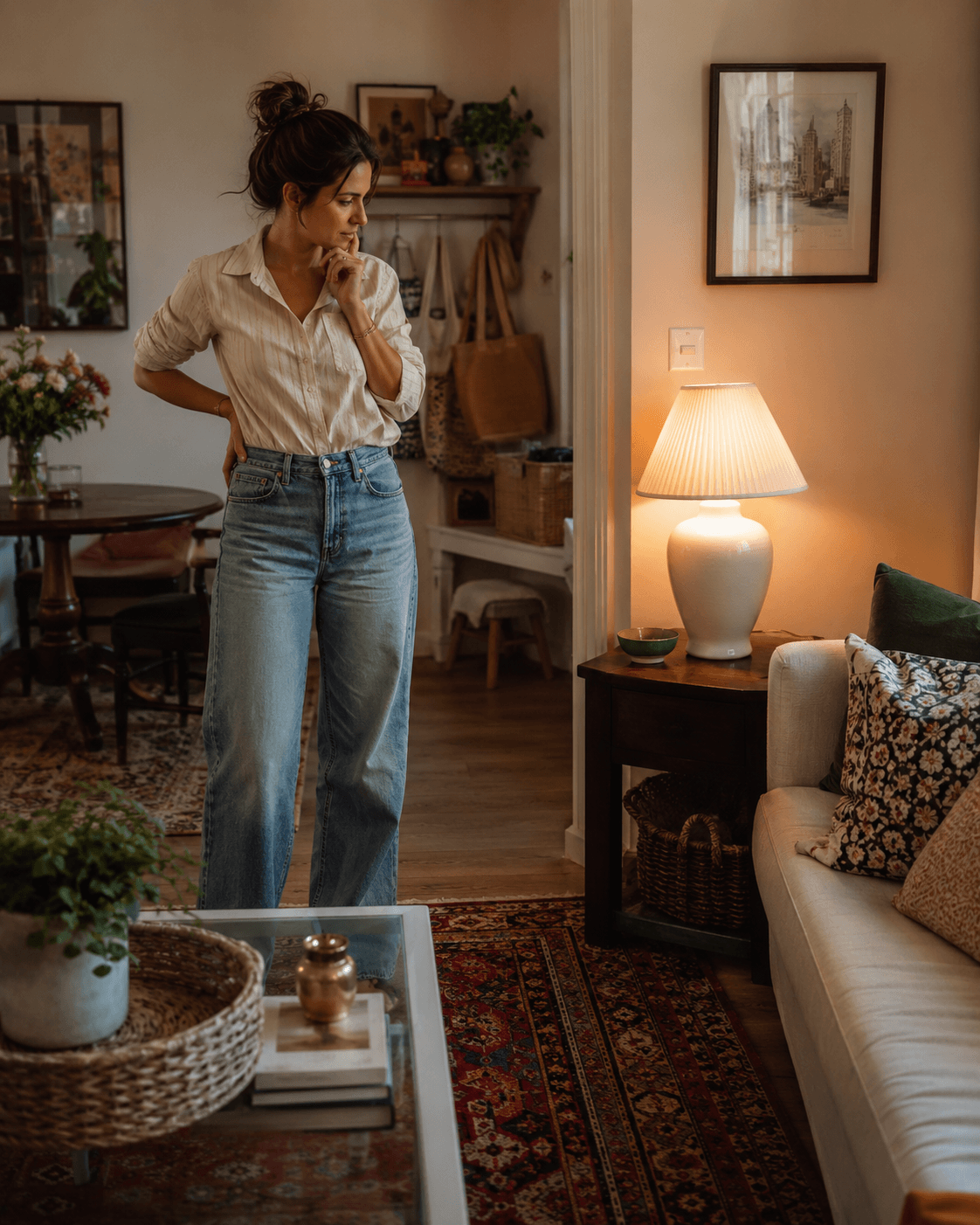
You know that little thrill when you spot a beautiful lamp in a shop?
It’s glowing softly on the shelf, looking all expensive and interesting. You can already picture it on your side table, making your home feel thoughtful and finished. So you buy it, carry it home, plug it in… and then your heart sinks.
Because somehow, in your actual room, next to your actual sofa, your actual curtains and that rug you bought during a sale panic, it looks completely wrong.
Not ugly. Just wrong.
That’s usually when you wonder how to find your home decor aesthetic in a way that works outside Pinterest. Not in someone else’s huge white kitchen. Not in a dreamy New York loft. In your real home, with your real budget, your real landlord, your real storage problems, and the slightly awkward corner you’ve never known what to do with.
The problem usually isn’t that you have bad taste.
It’s that you’re buying beautiful individual things without knowing the bigger story they’re meant to belong to.
And that is how you end up with a rattan mirror, a velvet chair, a modern lamp, farmhouse mugs, a striped rug, and no clue why your room still feels unsettled.
Let’s fix that.
Why Your Home Feels Like A Random Collection Of Purchases
Most people don’t decorate badly. They decorate reactively.
You see something pretty, affordable, or “very you” in the moment, and you bring it home. Then you repeat that for three years.
Suddenly your home is a scrapbook of moods you had on random Saturdays.
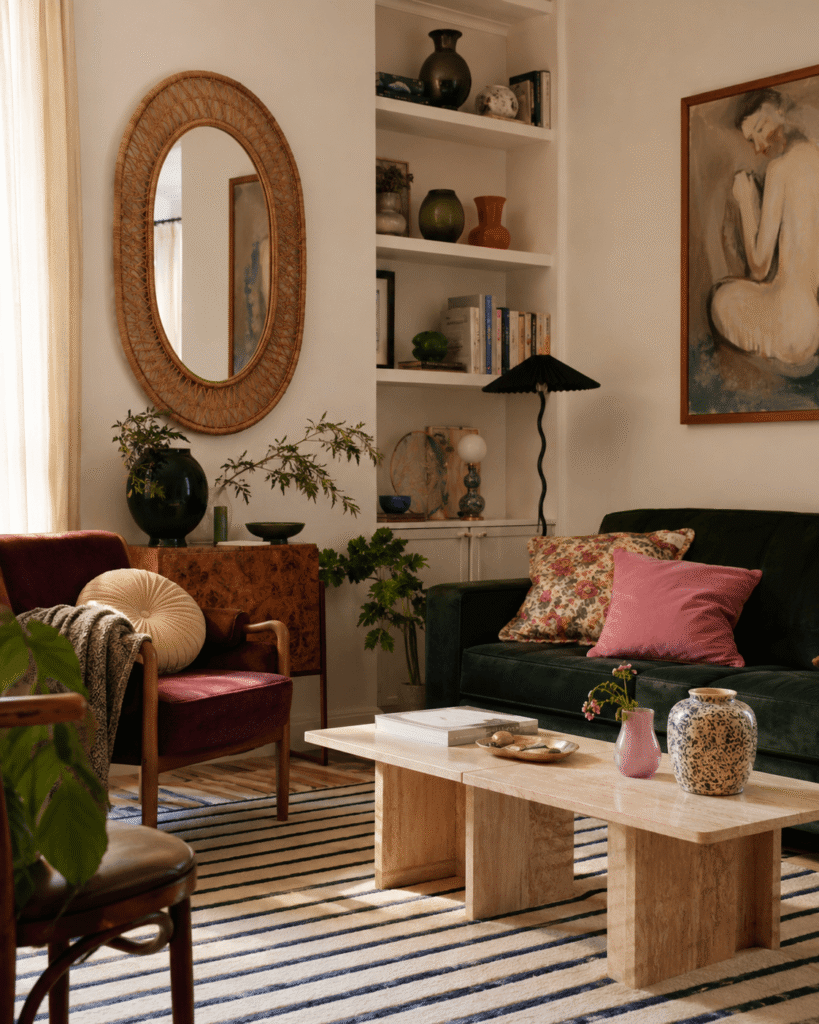
One week you wanted calm and clean. The next week you wanted colourful and playful. Then autumn arrived and you bought five amber glass candle holders because they made you feel like a woman who bakes sourdough and owns linen napkins.
Your home starts to feel confusing because every item is speaking a slightly different language.
This is especially true when you scroll Pinterest, Instagram, TikTok, and home tours every night. You’re not just seeing one version of beauty. You’re seeing hundreds.
A soft beige bedroom. A green kitchen with brass handles. A pink sofa. A cottage hallway. A Paris apartment. A white Scandi flat. A dark moody living room with a gallery wall.
You can love all of them.
But you probably can’t live happily with all of them at once.
That’s the key.
Your aesthetic isn’t every style you admire. It’s the style you want to wake up inside, clean around, invite people into, and still enjoy when the trend has moved on.
How To Find Your Home Decor Aesthetic Without Copying Someone Else’s Home
Start by ignoring the question, “What do I like?”
It sounds helpful, but it’s too wide. You like too many things. You’re a person, not a paint chart.
A better question is: “How do I want my home to feel when I walk in?”
That answer is much more useful.
Do you want your home to feel calm, bright, and simple? Warm, layered, and creative? Polished, cosy, and grown-up? Fresh, airy, and practical? Rich, dramatic, and full of stories?
This is where you stop collecting random inspiration and start noticing patterns.
Open your saved Pinterest boards or screenshots. Don’t look at the rooms as whole rooms. Look for repetition.
Are you always saving pale walls? Dark wood? Patterned rugs? Open shelving? White bedding? Vintage mirrors? Stripe cushions? Plants? Candlelight? Colour? Symmetry? Empty space?
Your taste is already leaving clues.

You just need to stop treating every saved image like a separate fantasy and start reading them like evidence.
I once realised nearly every room I saved had warm lighting, old wood, soft textiles, and something slightly imperfect. That told me far more than the style names did.
It told me I wanted my home to feel lived-in, gentle, and a little romantic.
The “3 Style Words” Exercise You Can Do Today
Before you buy another lamp, rug, vase, print, cushion, or “just a little something,” choose three adjectives for how you want your home to feel.
Not how you want it to look.
How you want it to feel.
Try words like: calm, warm, bright, earthy, romantic, playful, elegant, cosy, fresh, collected, simple, soft, dramatic, cheerful, polished, natural, grown-up, relaxed.
Pick only three.
For example:
Calm, warm, simple.
Or: romantic, cosy, collected.
Or: playful, colourful, relaxed.
These three words become your filter.
When you’re shopping, ask: “Does this lamp feel calm, warm, and simple?” If the answer is no, it might still be beautiful, but it’s not for this version of your home.
This tiny exercise saves money because it stops you buying for a fantasy life you don’t actually live.
It also makes your home feel more like you because you’re choosing from emotion first, not trend first.
Write your three words in your phone notes.
Then use them ruthlessly.
The 5 Main Home Aesthetics, Explained Like A Real Person
Style names can be useful, but they can also make decorating feel weirdly academic.
You don’t need to memorise design terms. You need to understand what each aesthetic feels like in real rooms.
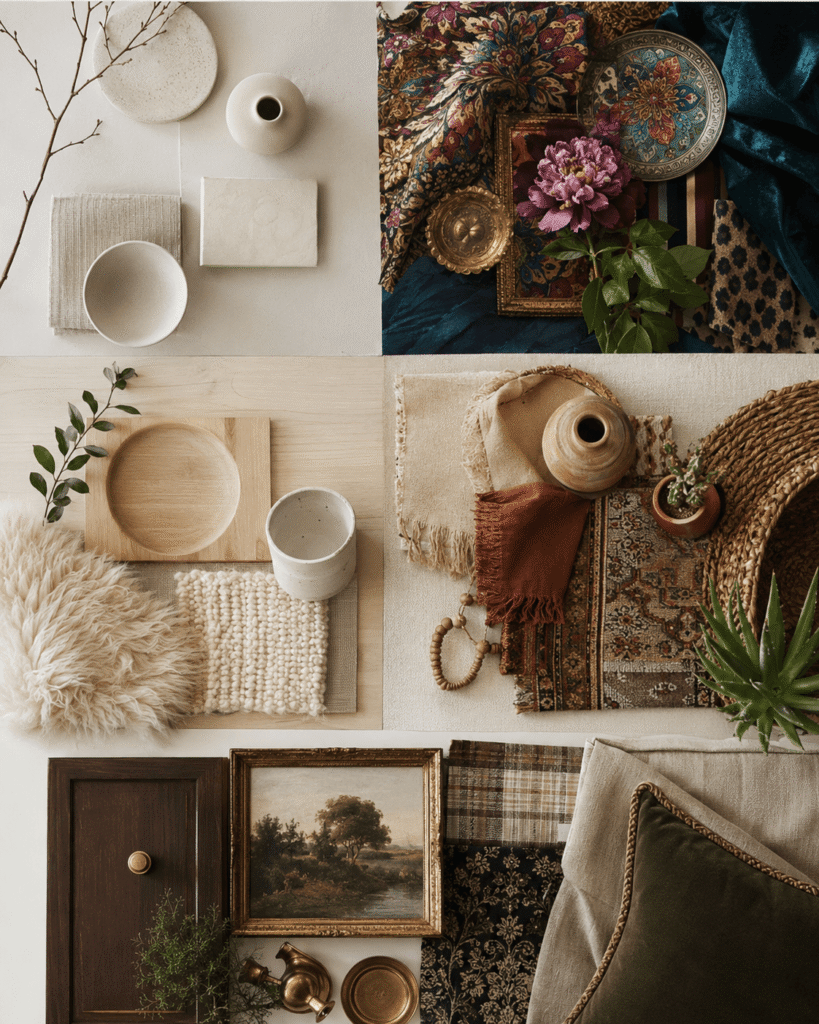
Here are five main home aesthetics in plain language.
Minimalist
Minimalist homes feel clear, quiet, and uncluttered.
Picture smooth surfaces, fewer objects, simple furniture shapes, and plenty of breathing room around everything. The colours are often soft, pale, black, white, grey, beige, or natural wood.
A minimalist room doesn’t shout for attention. It gives your eyes somewhere to rest.
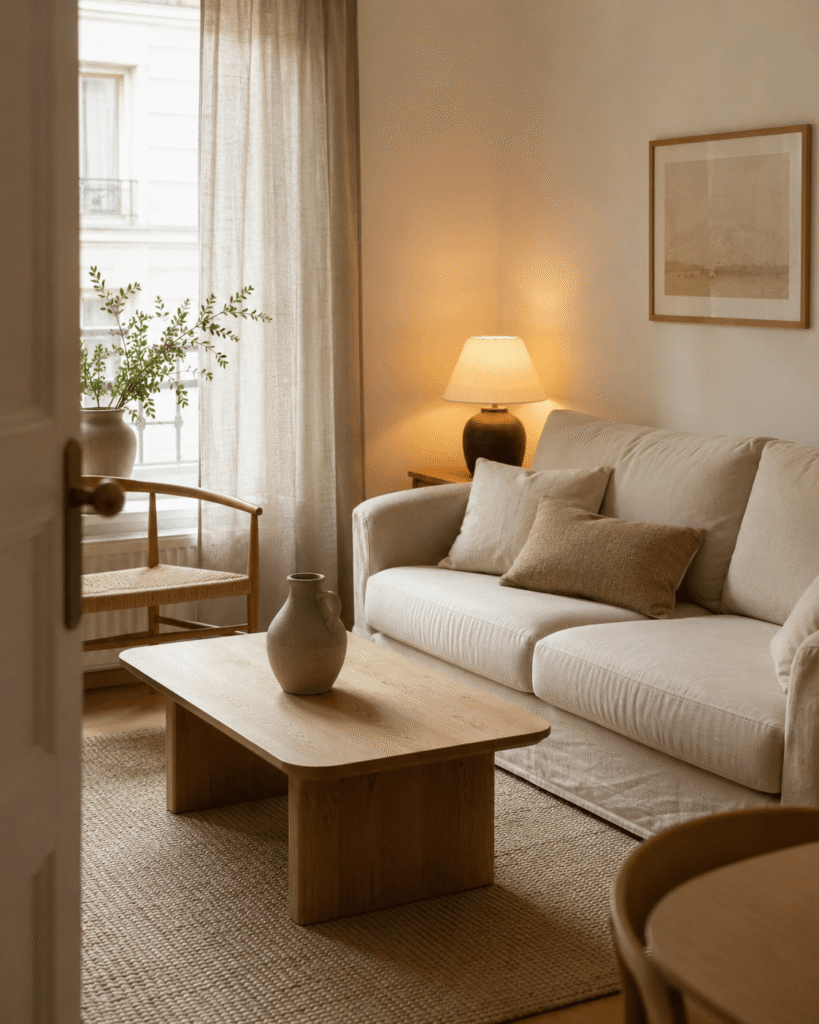
This works beautifully if mess makes you anxious, but it can feel cold if you remove too much personality. The trick is to keep texture: a soft rug, a lovely wooden bowl, linen bedding, warm lighting.
Maximalist
Maximalist homes feel bold, layered, and full of personality.
Picture colour, pattern, books, artwork, lamps, cushions, objects from travels, unusual finds, and walls that actually have something to say. It’s the opposite of empty.
A good maximalist room feels exciting and personal, not like a cupboard exploded.
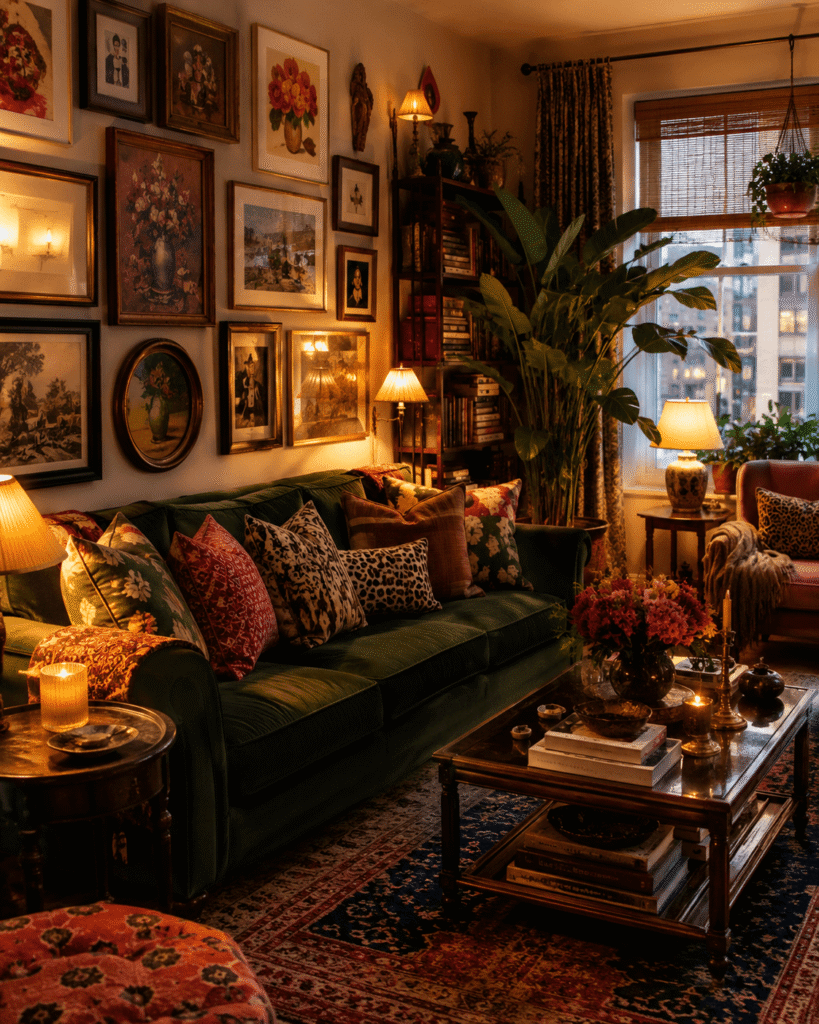
I went through a maximalist phase I genuinely regret — not because maximalism is wrong, but because it wasn’t really me. I mistook “interesting” for “right for my nervous system,” and my living room became a place where I could never fully relax.
Scandi
Scandi homes feel light, practical, and gentle.
Think pale wood, white or soft neutral walls, simple furniture, cosy blankets, candles, and rooms that make winter feel less miserable. It’s clean, but not stiff.
A Scandi room often looks easy to live in.
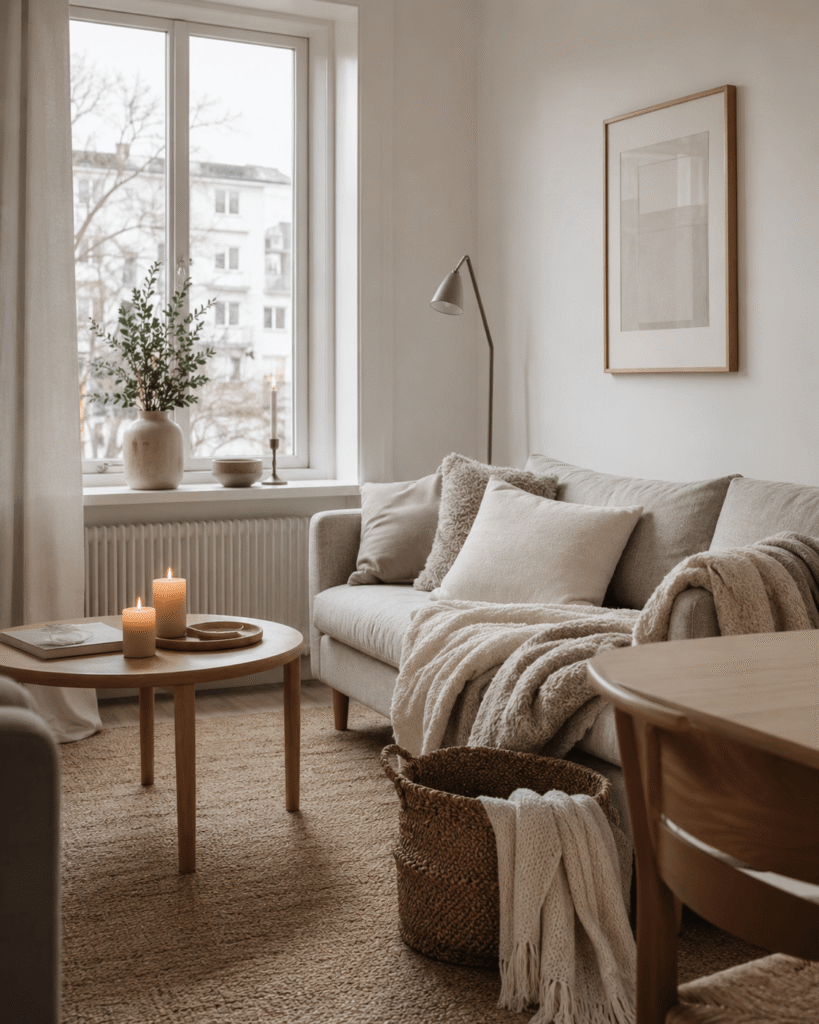
It’s especially good for smaller homes because it uses light colours and practical pieces without making everything feel bare. Add warmth with wool, cotton, woven baskets, soft lamps, and natural textures.
Bohemian
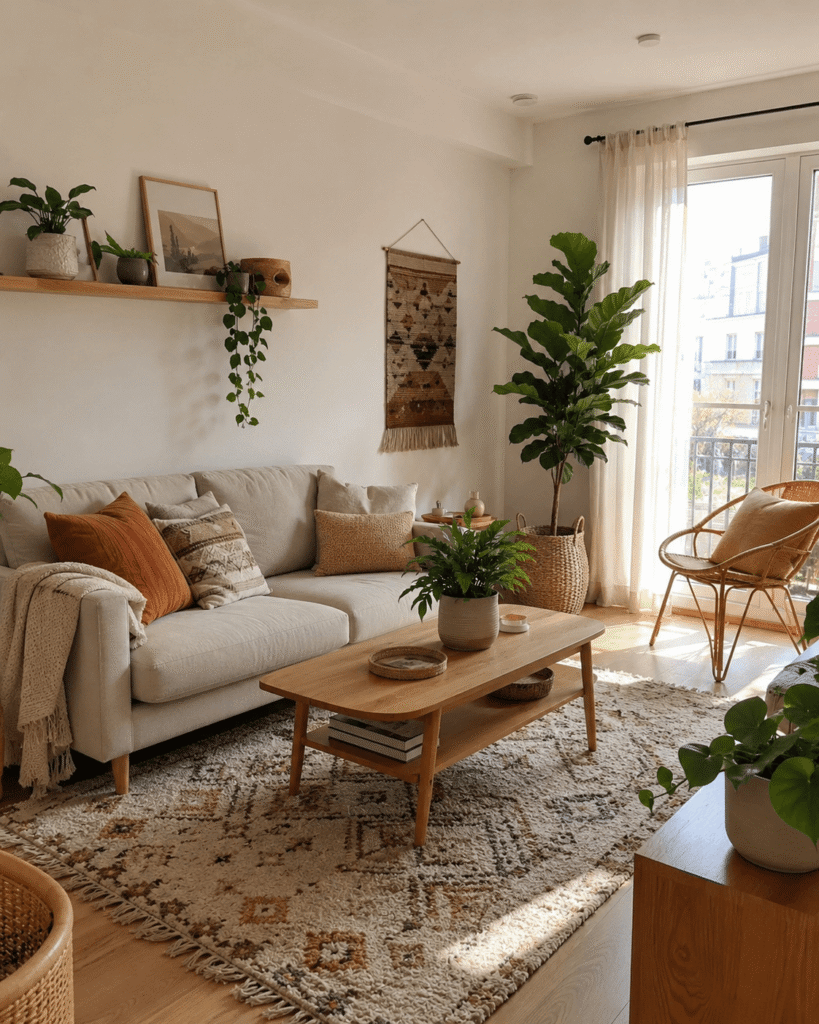
Bohemian homes feel relaxed, creative, and a little sun-drenched.
Picture plants, woven textures, layered rugs, soft throws, warm colours, handmade-looking pieces, and furniture that doesn’t look like it all came from the same shop. It feels casual and personal.
A bohemian room should feel like you could sit on the floor with a coffee and stay there for hours.
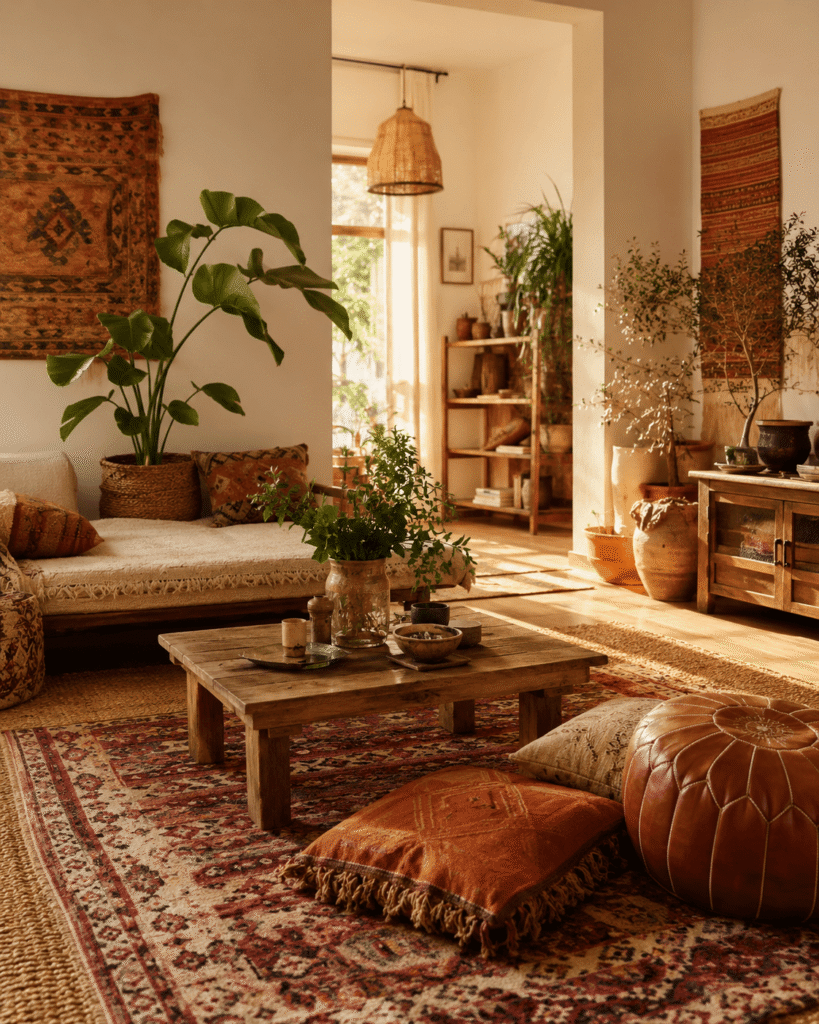
The danger is that it can quickly become cluttered if every surface gets filled. Keep the mood relaxed, but give the room structure with repeated colours and a few calmer areas.
Classic/Traditional
Classic or traditional homes feel timeless, cosy, and a little polished.
Think framed art, patterned or plain curtains, lamps with fabric shades, wooden furniture, soft seating, books, mirrors, and colours that feel settled rather than trendy. It often feels like a home that has been loved for years.
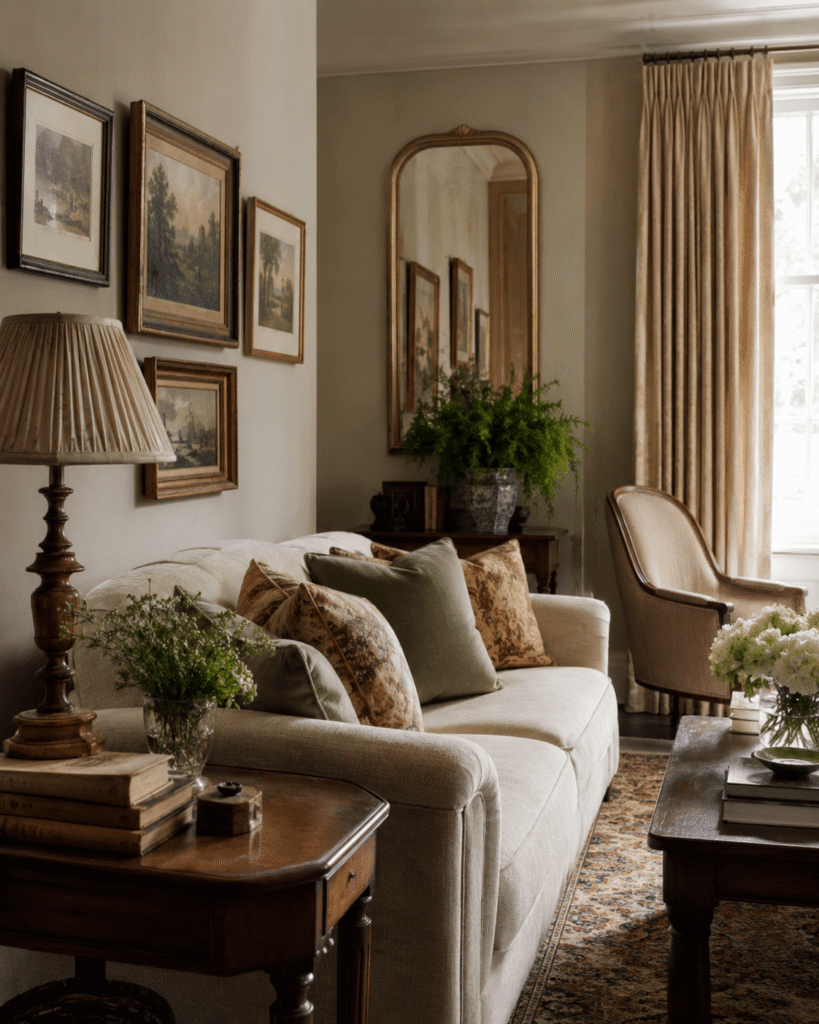
This aesthetic works beautifully in older houses and apartments with character.
It doesn’t have to mean formal or stiff. You can make it fresh with lighter colours, comfortable sofas, simple artwork, and a few modern touches.
Your Home’s Architecture Matters More Than Pinterest Admits
This is where real life comes in.
A style that looks effortless in a sun-filled California open-plan home might feel awkward in a narrow Victorian terrace or a compact city flat.
British homes — especially flats — often have very different constraints to American open-plan houses. Period features, sash windows and smaller rooms actually lend themselves beautifully to certain aesthetics over others.
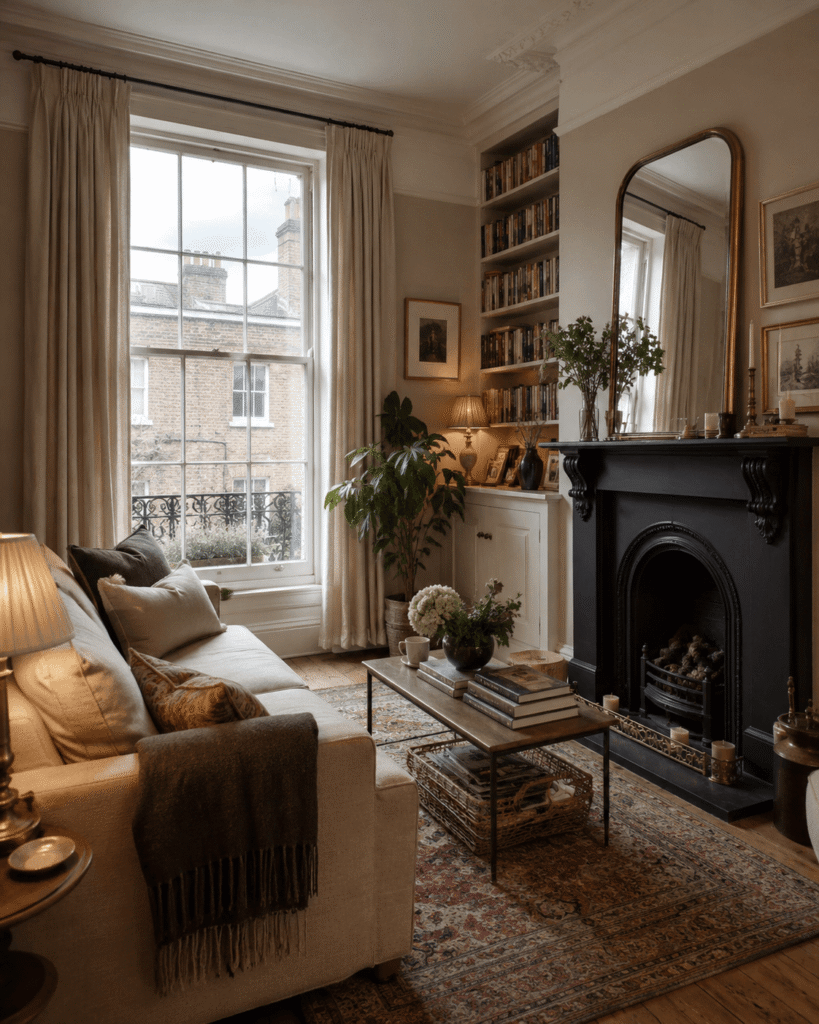
A tiny London living room with a fireplace might look gorgeous in classic, Scandi, or soft bohemian style. It may struggle with oversized American farmhouse furniture or huge open-plan styling ideas.
A newer apartment with plain white walls and less architectural detail might suit minimalist, Scandi, or modern classic choices because you can add character slowly through lighting, art, and texture.
European apartments often have quirks too: tiled floors, high ceilings, small kitchens, old doors, funny layouts, or rented walls you can’t paint.
Don’t fight the bones of your home.
Work with them.
If your flat has small rooms, avoid copying enormous rooms with giant sectionals and huge coffee tables. If your home has low light, don’t base your whole plan on bright white rooms that only work with sunshine.
Aesthetic is not just taste.
It’s taste plus architecture, budget, lifestyle, and storage.
That’s why someone else’s “dream room” can become your daily irritation.
The Fastest Way To Spot Your Real Aesthetic
Look at what you keep when life gets messy.
Not what you save online. Not what you admire in hotels. What do you still love when there’s laundry on a chair and dishes in the sink?
That’s your real taste.
Do you still love a room when it’s busy, or do you crave clear surfaces? Do you like seeing your books and objects, or do you want most things tucked away? Do you enjoy colour every day, or only in other people’s homes?
I once stayed in a very clean, very white apartment and thought I’d found my new personality.
For three days, I loved it.
By the end of the week, I missed pattern, old wood, lamps, and little sentimental objects. That taught me I don’t want a blank home. I want a calm home with warmth and memory.
That difference matters.
How To Use Pinterest Without Losing Your Mind
Pinterest is helpful if you use it like a detective, not like a shopper.
Make a board called “Rooms I’d Actually Live In.” That title is important.
Not “dream homes.” Not “one day.” Not “rich woman kitchen.” Real rooms.
Save only rooms that would make sense for your actual home, or at least your actual life.
Then, after saving 20 images, scan them quickly and write down what appears again and again.
Maybe you notice cream walls, green accents, striped cushions, wooden tables, and lots of lamps.
That tells you your aesthetic might be soft classic with a little cottage warmth.
Maybe you notice low furniture, plants, woven shades, vintage rugs, and terracotta tones.
That points toward bohemian, but you might want a calmer version if your three words include “peaceful” or “simple.”
Maybe you notice empty floors, pale wood, white bedding, and black picture frames.
That could be minimalist or Scandi, depending on whether you want it to feel crisp or cosy.
The point is not to name your aesthetic perfectly.
The point is to notice what keeps coming back.
How To Blend Two Aesthetics Without It Looking Messy
Most people are not one pure aesthetic.
You might love Scandi calm but also want classic charm. You might want minimalist surfaces with bohemian warmth. You might love traditional furniture but want playful colour.
That’s normal.
The trick is to choose one main aesthetic and one accent aesthetic.
Think 70/30.
Your main aesthetic should guide the big things: sofa shape, furniture style, wall colour, rug, curtains, storage, and lighting.
Your accent aesthetic can show up in smaller pieces: cushions, art, lamps, ceramics, books, throws, and decorative objects.
For example, Scandi plus bohemian can work beautifully. Keep the room light, simple, and practical, then add woven textures, plants, earthy colours, and a relaxed rug.
Classic plus minimalist can also work. Choose timeless furniture shapes and soft lamps, but keep surfaces clear and colours restrained.
Maximalist plus traditional can be gorgeous too. Use classic furniture and framed art, then add richer colours, pattern, and personality.
Where it goes wrong is when every item comes from a different mood.
A chrome modern lamp, rustic farmhouse table, neon artwork, bohemian rug, velvet scalloped chair, and beachy mirror can all be nice alone. Together, they may feel like five people arguing.
Repeat something.
Repeat a colour, a wood tone, a metal finish, a shape, or a feeling.
Repetition is what makes a room feel intentional.
Test An Aesthetic Cheaply Before Buying Furniture
Please don’t buy a new sofa because you had one dramatic Sunday evening with Pinterest.
Test first.
Use throw cushions, candles and a print to test an aesthetic before buying furniture.
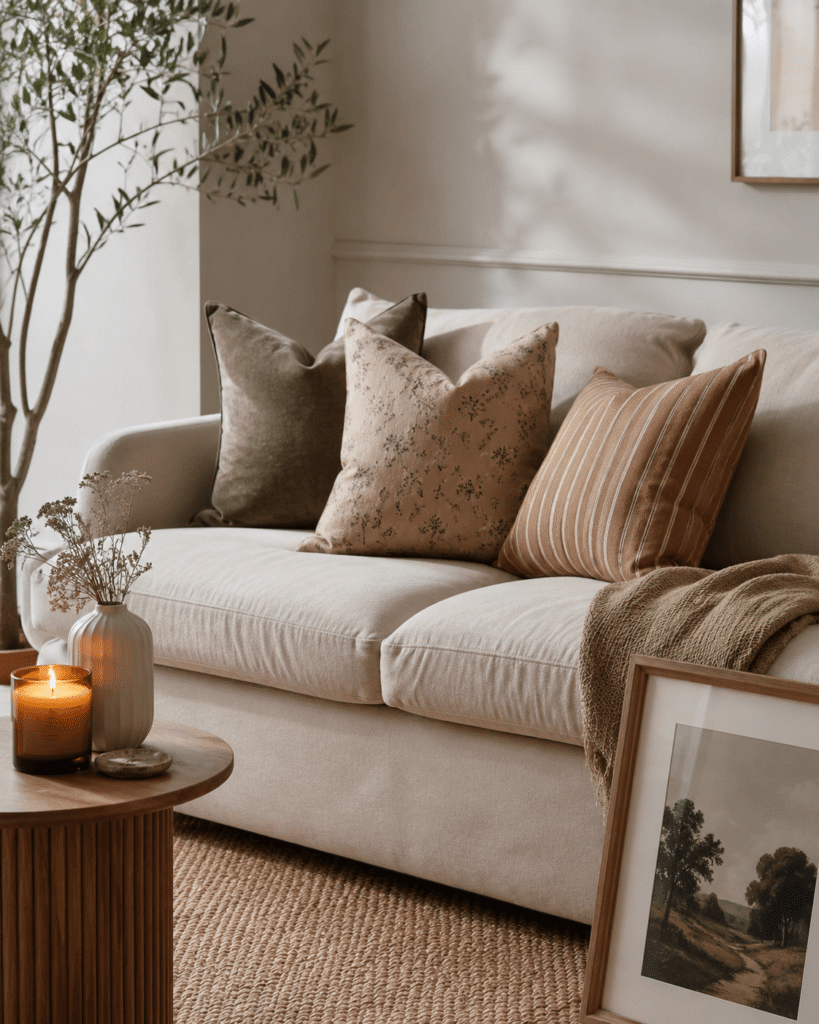
Those small pieces can tell you whether you actually want to live with a look or whether you only liked the photo.
Want to try bohemian? Add a textured cushion, a warmer candle holder, and a leafy or abstract print.
Want to try classic? Add a striped cushion, a framed print, and a fabric lampshade if you already own a lamp that can take one.
Want to try minimalist? Remove half the little objects from one surface, use one simple candle, and try a calmer piece of art.
Live with the test for two weeks.
Notice how you feel.
Do you feel more at home, or are you itching to change it again?
This is how you stop making expensive decisions based on a passing mood.
What To Do Before You Buy Anything New
Shop your own home first.
Move things around. Take the lamp from the bedroom into the living room. Try the hallway mirror above the console. Put all your cushions on the floor and only return the ones that match your three words.
You may already own your aesthetic.
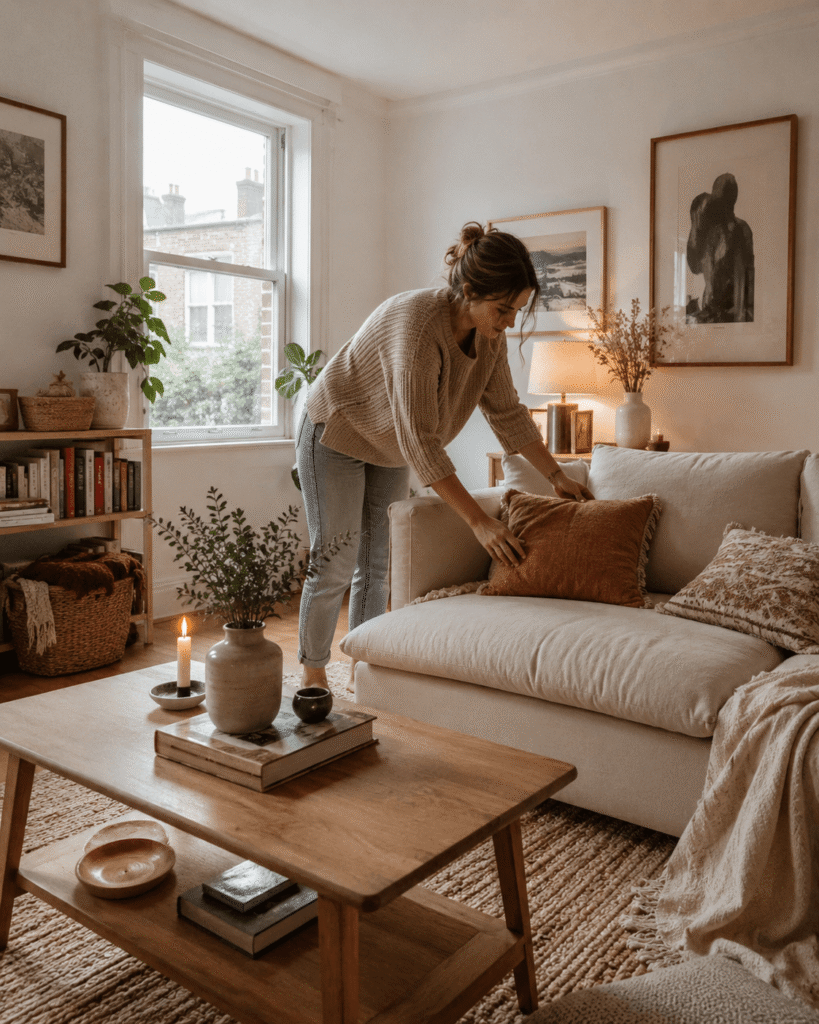
It might just be buried under impulse buys.
I once avoided buying a new coffee table by removing three things from my living room and moving one small side table from another room. It suddenly made sense.
Sometimes your home doesn’t need more.
It needs fewer mixed messages.
Before buying anything, ask four questions.
Does this match my three style words?
Does it work with at least three things I already own?
Does it suit the size and light of my home?
Would I still like it if it wasn’t currently popular?
That last one is brutal, but useful.
Trends can be fun. They just shouldn’t be driving the car.
Signs You’re Buying For The Wrong Aesthetic
You keep buying pieces that look lovely in the shop but strange at home.
You own lots of decor, but your room still feels unfinished.
You have saved hundreds of rooms, but none of them look like your actual home.
You keep changing direction every few months.
You feel slightly embarrassed when people come over because your home doesn’t feel like you.
These are not signs that you have no taste.
They’re signs that you need a clearer filter.
Your aesthetic should make shopping easier, not stricter. You’re not creating rules to punish yourself. You’re creating a path so every purchase has somewhere to belong.
A Simple Process To Find Your Style This Week
Day one: choose your three style words.
Day two: make a Pinterest board only for rooms you’d actually live in.
Day three: write down the repeated colours, textures, furniture shapes, and moods.
Day four: remove anything from one room that clearly fights your three words.
Day five: move existing pieces around before shopping.
Day six: test your aesthetic with small, cheap items like cushions, candles, or a print.
Day seven: decide what one bigger piece would help the room most, but don’t buy it yet.
Give yourself a little time.
The right purchase still feels right after the first rush wears off.
The Goal Isn’t A Perfect Home
Your home doesn’t need to look like a showroom.
It should feel like the best, most settled version of you.
That might mean calm and simple. It might mean colourful and bold. It might mean old books, checked cushions, soft lamps, and a kitchen table with scratches.
A beautiful home is not one where every trend has been followed.
It’s one where the choices make sense together.
So the next time you’re holding a lamp in a shop, admiring its shape and already imagining the compliments, pause.
Open your three style words.
Picture your actual room, not the fantasy one.
Ask whether that lamp belongs to the home you’re slowly making.
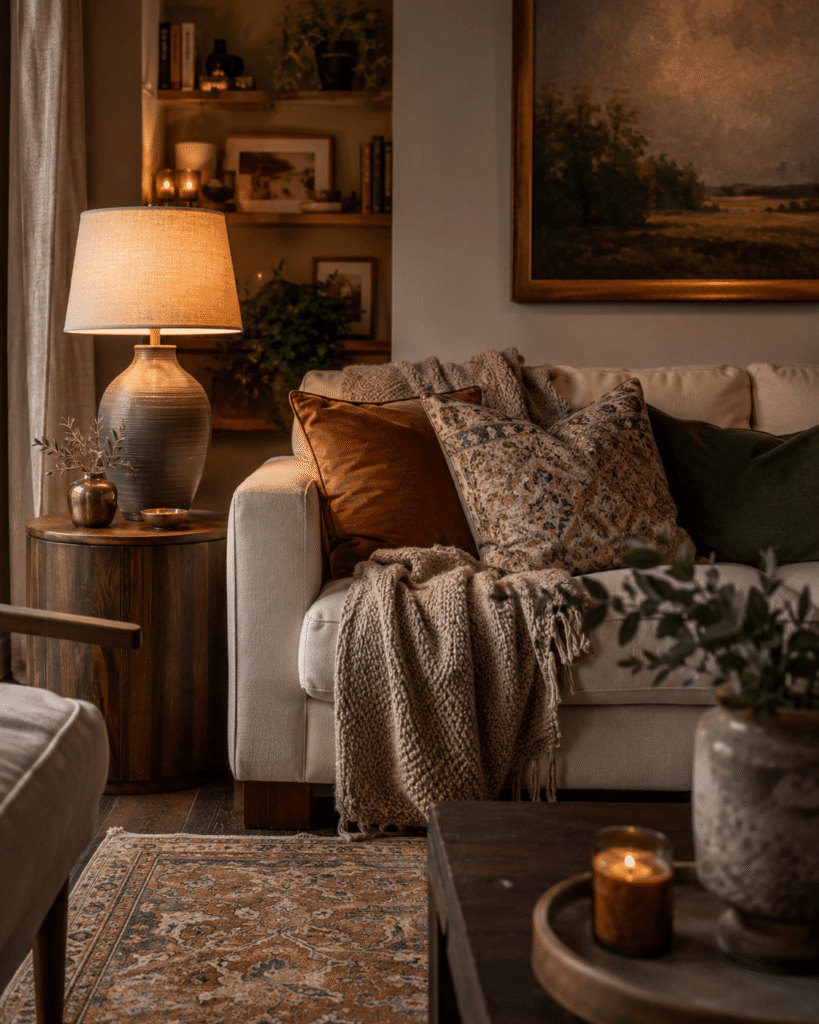
If yes, lovely.
If no, leave it for someone else’s story.
Your home will thank you.