

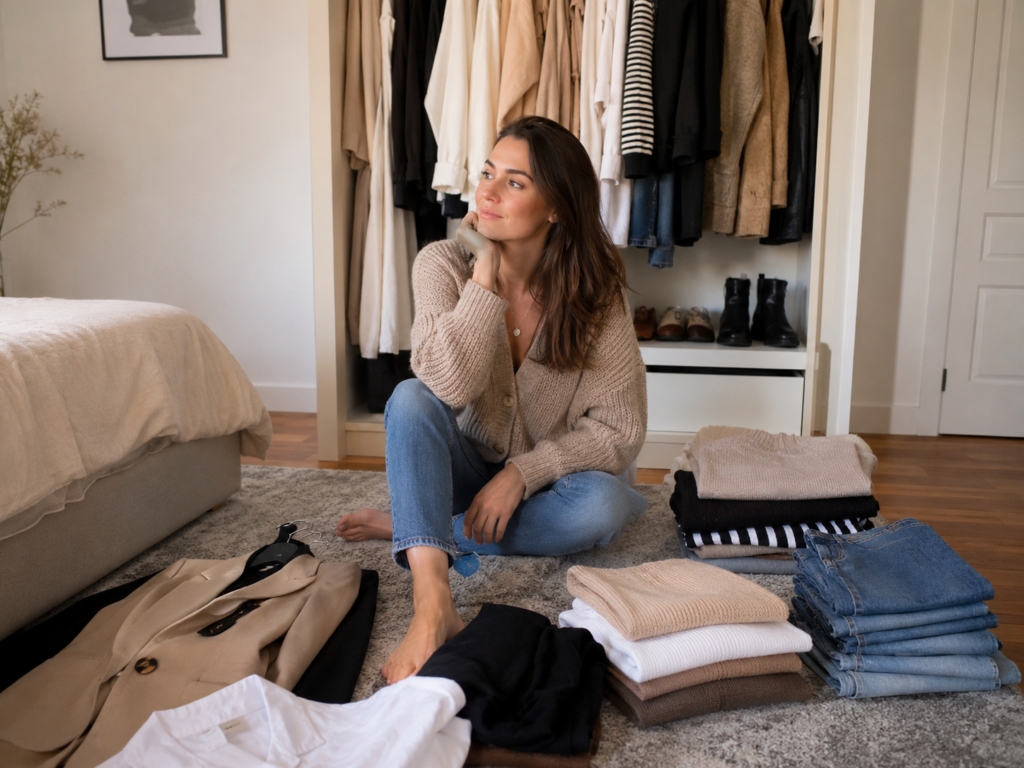
You’re standing in front of a full wardrobe at 7am, half-dressed, one sock on, coffee cooling on the dresser, and somehow nothing in front of you feels right.
There are jeans you used to love, dresses you bought for a version of yourself who went out more, blazers that feel too stiff, and tops that looked perfect online but don’t feel like you in real life.
That moment can make you feel dramatic, but you’re not. You’re just trying to work out how to find your personal style when your wardrobe has become a record of old jobs, old moods, old bodies, old trends, and a few hopeful purchases that never quite landed.
This guide will help you understand what your real life needs, choose your style words, notice what you already love, and shop with more confidence.
No panic buying.
No fashion identity crisis.
Just you, getting dressed with more ease.
Why Most Women Struggle to Define Their Style
Most women don’t struggle with style because they lack taste.
They struggle because they’ve absorbed too many opinions.
You see a linen waistcoat on one woman, a glossy quiet-luxury outfit on another, a bright Copenhagen-style colour mix on someone else, and suddenly your own wardrobe looks wrong.
That’s the trend trap.
It tells you that your style should change every time your feed does, which means you never get enough space to notice what actually feels good on your own body, in your own life.
You might buy something because it looks current, but then you try it on at home and feel like you’re wearing someone else’s personality.
It’s not that the piece is bad.
It’s just not yours.
Another reason you feel stuck is that you may still dress for who you were five years ago.
Maybe you used to go into an office every day, and now you work from home three days a week. Maybe you became a mum, changed careers, moved cities, gained confidence, lost confidence, changed shape, or simply stopped enjoying the clothes that once made you feel polished.
Your wardrobe can lag behind your life.
That’s where the frustration starts.
In my experience, the most confusing wardrobe moments happen when you’re trying to dress your current self from an old emotional closet.
You keep reaching for the woman you used to be, then wondering why the outfit doesn’t feel natural anymore.
That doesn’t mean you need to throw everything out.
It means you need to pay attention to what your clothes are asking you to admit.
You’ve changed.
Your style can catch up.
Step 1 — Understand What Your Life Actually Needs From Your Wardrobe
Before you decide whether you’re classic, bohemian, romantic, minimalist, sporty, feminine, dramatic, or anything else, look at your actual week.
Not your fantasy week.
Your real one.
The one with the school run, the commute, the video calls, the supermarket dash, the Sunday lunch, the date night, the gym class you may or may not make, and the evenings when you just want soft trousers and peace.
Your personal style won’t work if it only suits the life you imagine you should have.
It needs to support the life you’re living.
Start with three categories: work life, social life, and home life.
For work, ask what you genuinely need to wear. Maybe you need structured pieces, maybe you need smart-casual outfits, or maybe you only need waist-up polish for calls and comfortable bottoms nobody sees.
Be honest.
For your social life, think about where you actually go.
If most of your plans involve dinner with friends, casual drinks, theatre nights, weekend markets, or relaxed gatherings at someone’s house, you don’t need endless “big occasion” outfits.
You need clothes that help you feel like yourself when you’re seen.
For home life, don’t treat it as an afterthought.
The clothes you wear at home shape your mood too, especially if you work remotely or spend a lot of your time there.
You don’t need to look dressed up on the sofa, but you deserve to feel considered, comfortable, and not like you’ve given up.
Here’s the practical exercise you can do today.
Take a blank note on your phone and write down your average week in clothes.
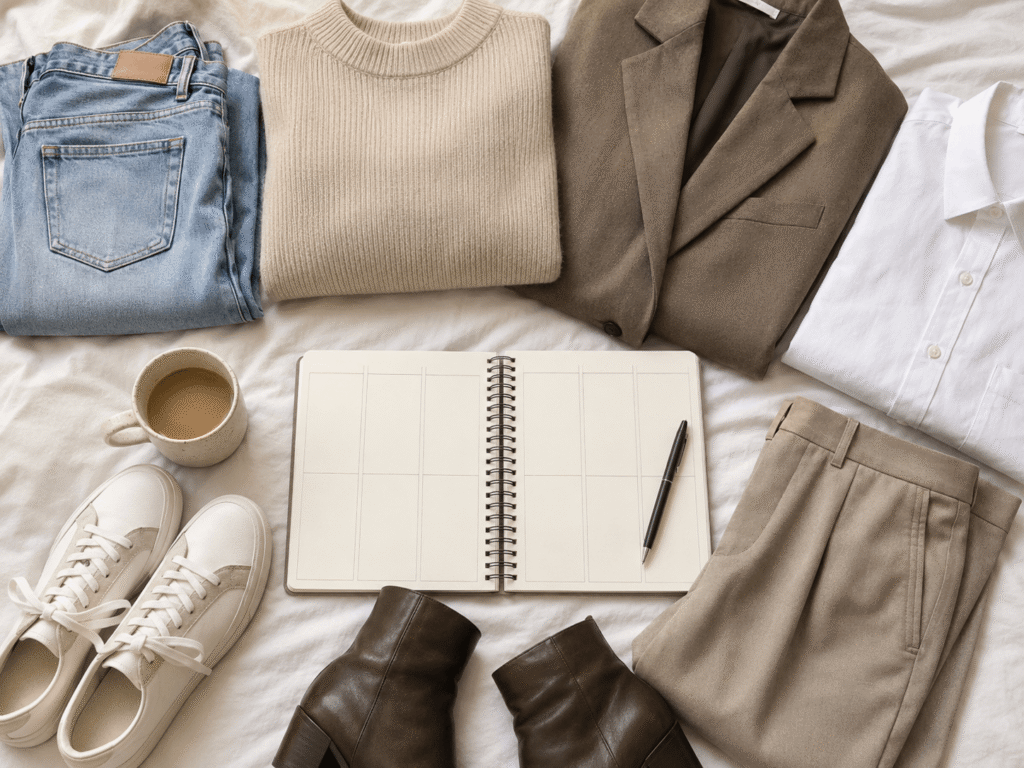
Monday: work calls, errands, dinner at home.
Tuesday: office day, commute, coffee after work.
Wednesday: gym, remote work, school pickup, quick dinner.
Keep going until Sunday.
Then write what you’d like to feel in each situation: calm, capable, attractive, relaxed, polished, creative, easy.
This simple list will show you where your wardrobe supports you and where it leaves gaps.
It’s not glamorous.
It works.
Step 2 — Find Your Three Style Words: How to Find Your Personal Style in Practice
Once you understand your real life, you can choose your style direction.
This is where your three style words come in.
Pick three adjectives that describe how you want to feel in your clothes, not just how you want to look.
That distinction matters.
Looking “chic” means very little if the outfit makes you feel stiff, awkward, or like you’re acting.
Feeling elegant, relaxed, and polished gives you a clearer guide.
Feeling bold, feminine, and modern gives you another.
Feeling practical, soft, and refined creates a totally different wardrobe.
Your three words act like a filter.
When you’re shopping, getting dressed, or deciding what to keep, you can ask: does this match the way I want to feel?
If the answer is no, you don’t need to force it.
Try combinations like elegant, relaxed, bold.
Or feminine, practical, polished.
Or minimal, warm, creative.
Or classic, soft, confident.
You don’t need the perfect words immediately.
You need honest ones.
Honestly, what I’ve found is that your first three words usually reveal more than you expect, because they show the emotional gap between how you dress now and how you want to move through the world.
Maybe you keep buying severe black tailoring, but your words are soft, warm, and feminine.
Maybe you keep buying floaty dresses, but your words are sharp, capable, and modern.
That mismatch explains a lot.
For a visual exercise, save 20 outfit images to Pinterest, your camera roll, or a simple folder.

Don’t overthink it.
Choose images because something about them pulls you in.
Then look at the full group and ask what keeps appearing.
Do you notice soft neutrals, relaxed shapes, clean lines, romantic details, denim, tailoring, monochrome, prints, gold jewellery, trainers, boots, silk, cotton, waist definition, oversized layers, or easy dresses?
Write down the repeated themes.
Then attach feelings to them.
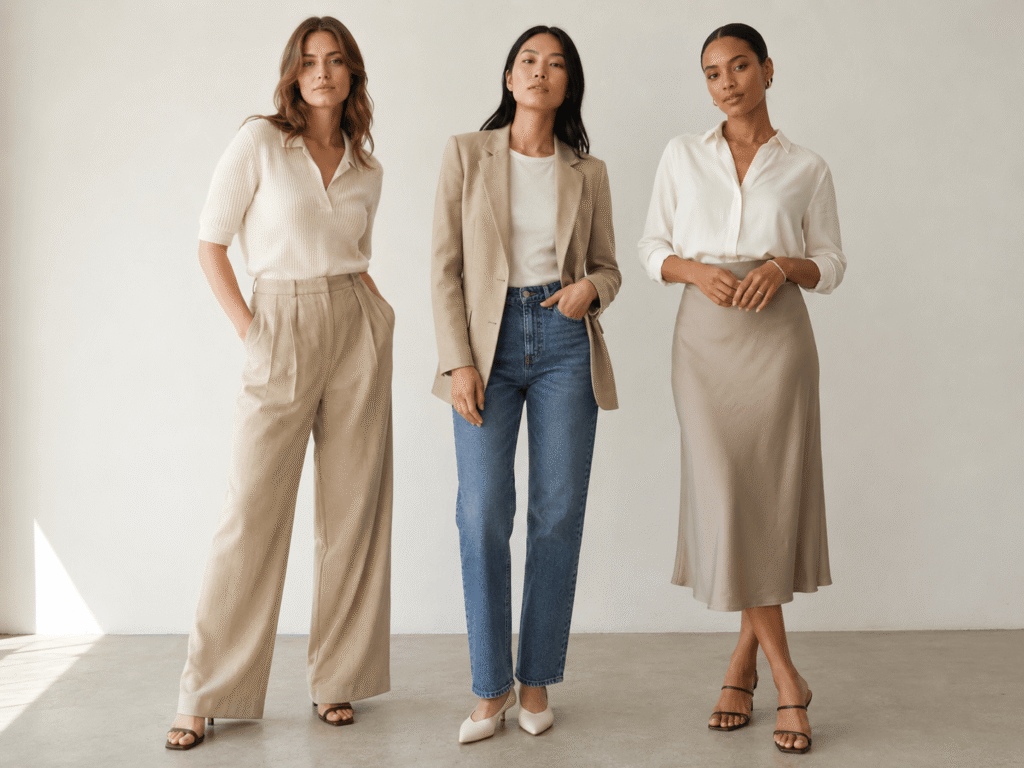
A cream knit and tailored trousers might say calm and polished.
A floral dress with boots might say feminine and grounded.
Wide-leg jeans with a blazer might say casual and pulled together.
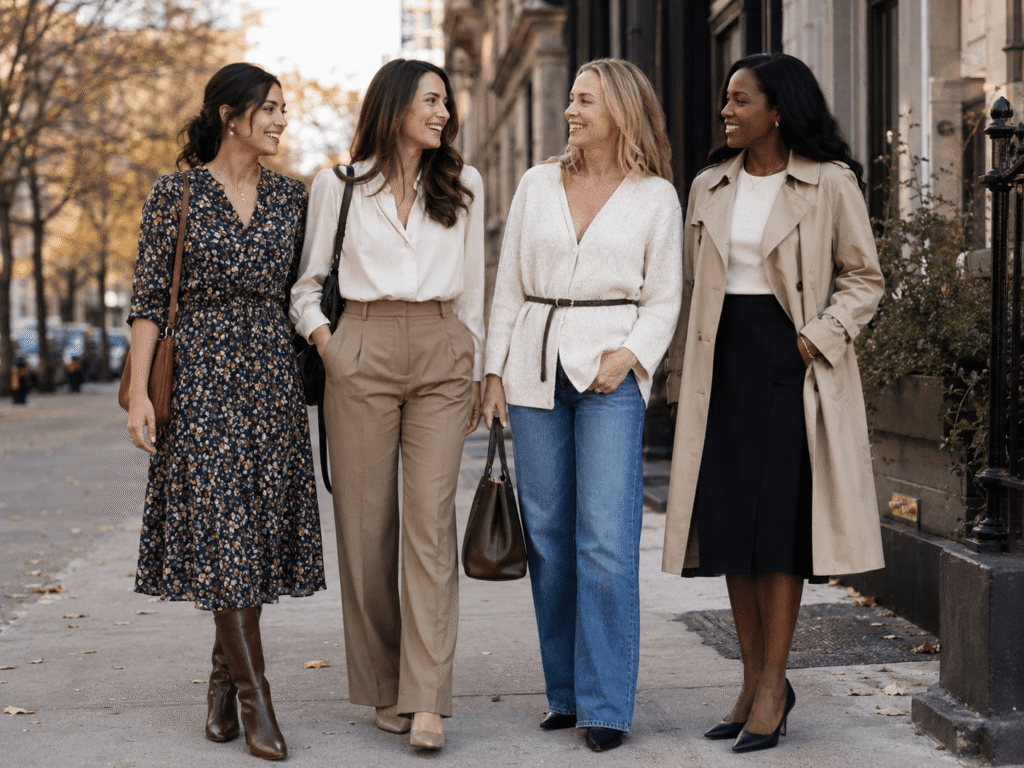
This exercise helps you stop copying full outfits and start spotting the mood behind them.
That’s the real skill.
You’re not building a costume.
You’re building a visual language for yourself.
Step 3 — Identify What You Already Love (And Wear)
Your best style clues already live in your wardrobe.
They’re probably not the newest pieces.
They’re the ones you reach for without thinking.
Open your wardrobe and pull out the clothes you wear most often.
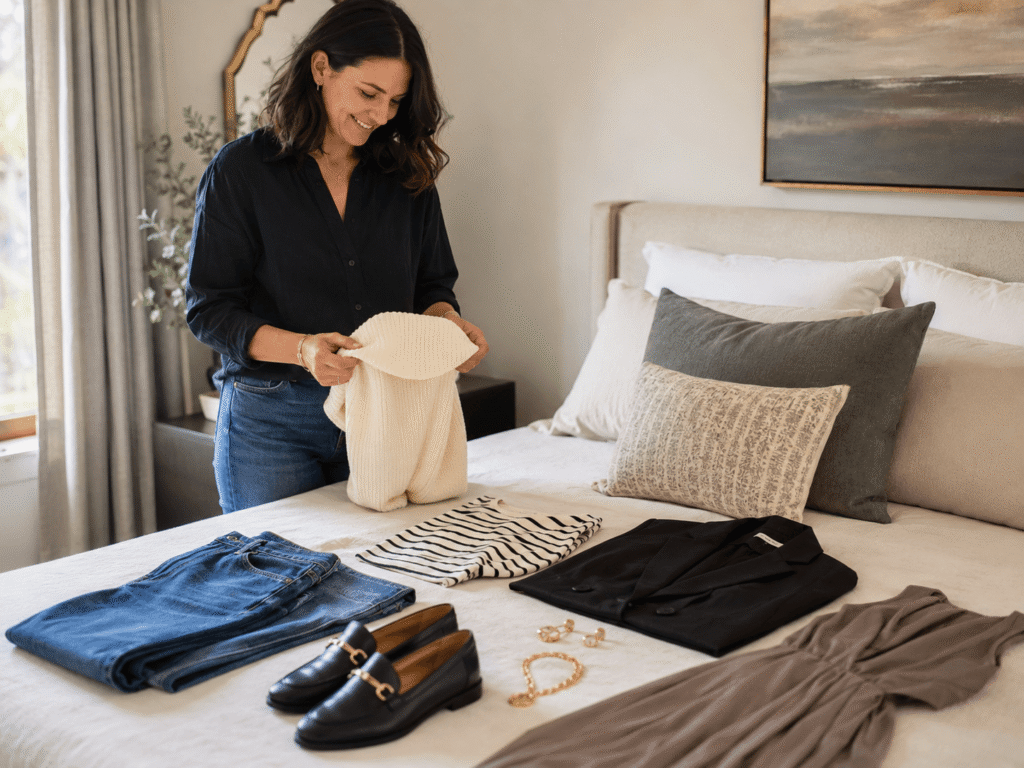
Not the clothes you wish you wore.
The real favourites.
Look at them together and ask what they share.
Maybe they all have a certain neckline.
Maybe they’re all soft at the waist, or structured at the shoulder, or in colours that make your face look awake.
Maybe they all let you move.
That matters more than any trend report.
Now try the back-of-the-wardrobe test.
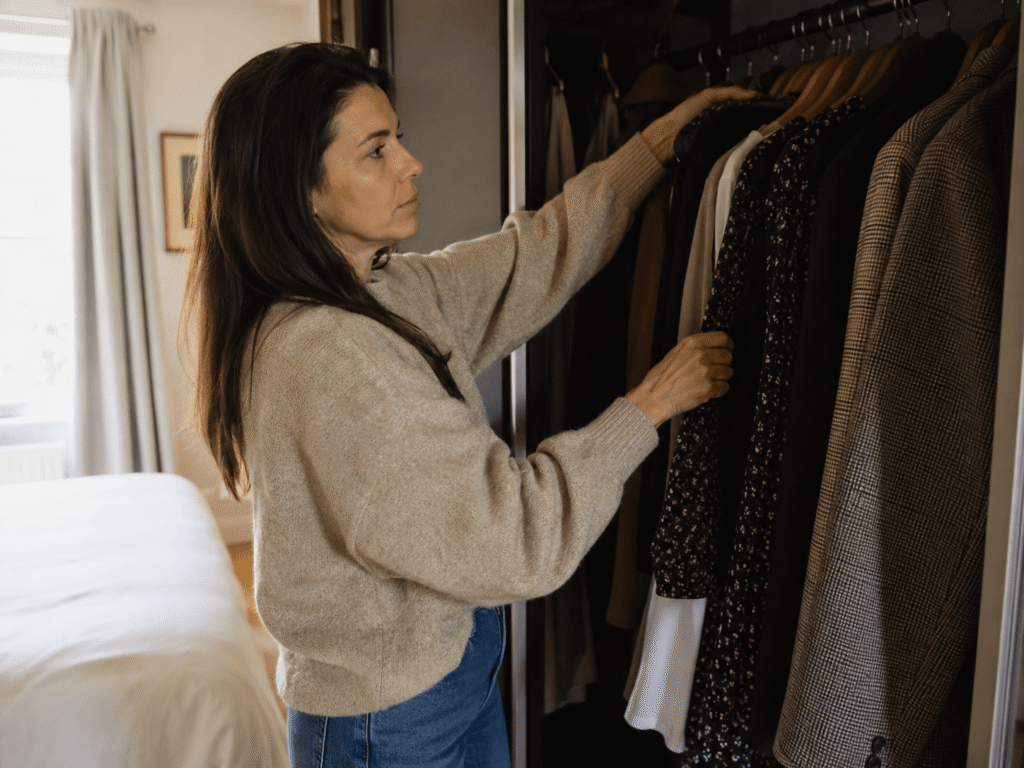
Look at the pieces you never wear, especially the ones hanging at the back like tiny guilt trips.
Ask why they stay there.
Too tight?
Too loud?
Too plain?
Too formal?
Too young?
Too unlike you?
Don’t shame yourself for buying them.
Use them as information.
A neglected dress can tell you that you dislike fussy sleeves.
A barely worn blazer can tell you that you need softer tailoring.
A pair of shoes you avoid can tell you that discomfort ruins confidence faster than anything.
Your wardrobe already has data.
You just need to read it.
Step 4 — Stop Shopping by Trend, Start Shopping by Feel
Trends aren’t evil.
They can add freshness, play, and inspiration.
The problem starts when you treat every trend as an instruction.
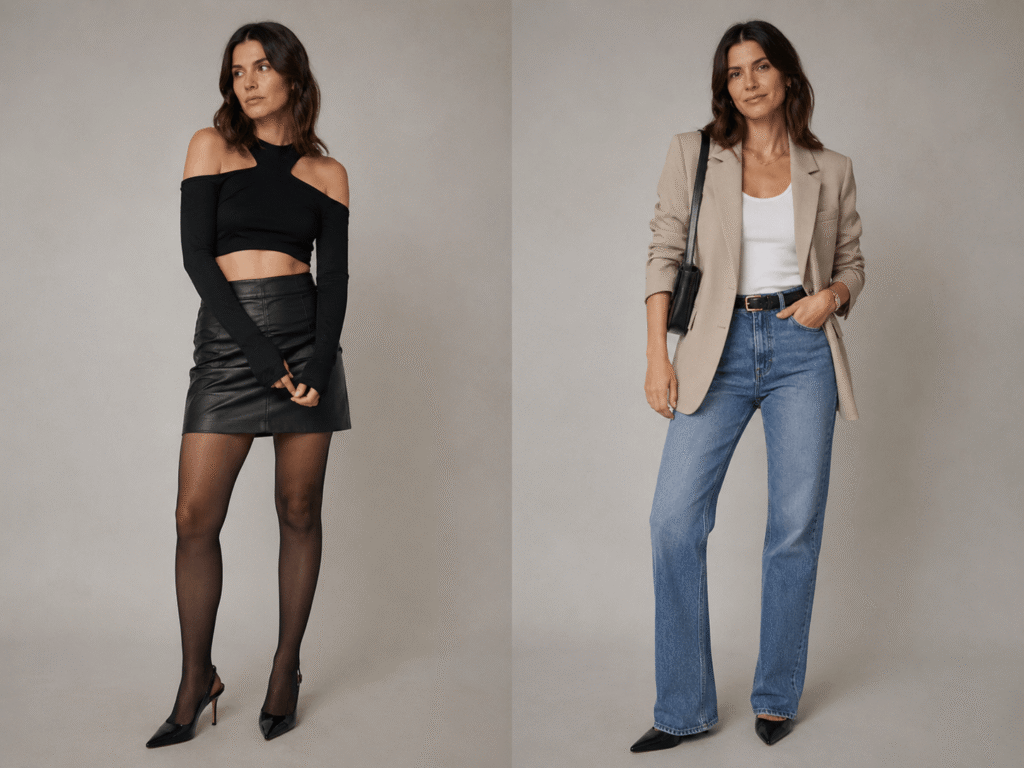
You don’t have to wear red tights, ballet flats, cargo skirts, sheer layers, oversized blazers, tiny bags, metallic trousers, or whatever else appears on your feed this month.
You can admire a trend and still leave it alone.
That’s style maturity.
British fashion culture gives you a useful lesson here, especially when you think about the way many women mix heritage pieces, lived-in denim, trench coats, knitwear, and slightly undone hair with a sense of ease that doesn’t scream for attention.
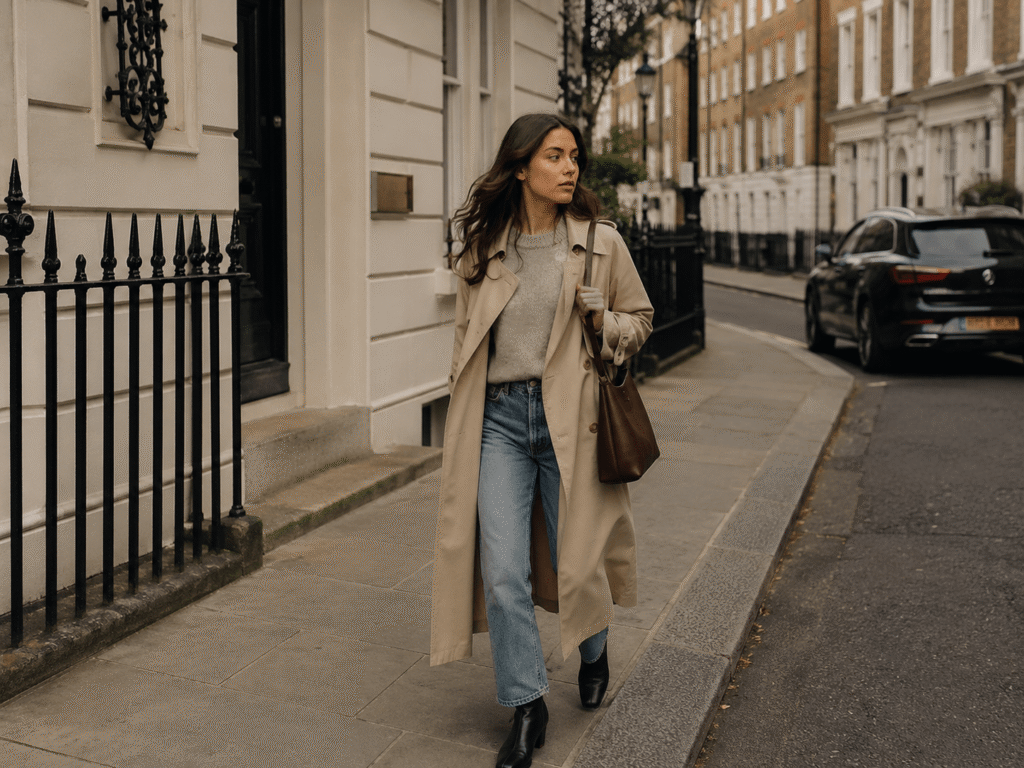
It’s not about looking perfect.
It’s about looking like your clothes belong to your life.
On the other hand, USA and Canada casualwear culture shows how powerful ease can be: great denim, simple tees, trainers, leggings, outerwear, and practical layers can look confident when the fit, fabric, and proportions feel intentional.
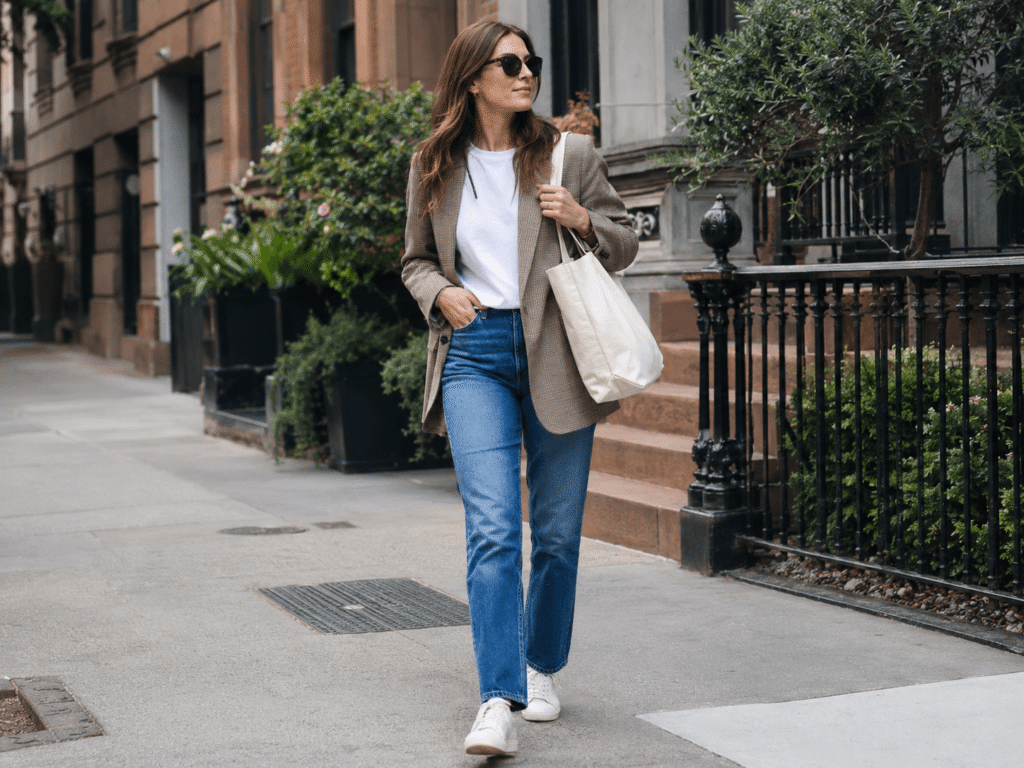
Neither approach wins.
You get to borrow the lesson that suits you.
Maybe you love European polish but need American comfort.
Maybe you love British timeless dressing but want a little more colour, shape, or glamour.
The point is to stop asking, “Is this trendy?”
Ask better questions.
Does this feel like me?
Can I wear it at least three ways?
Does it match my three style words?
Will I reach for it on a normal Tuesday?
Does it work with the life I actually live?
A trend can still enter your wardrobe, but it needs to pass through your filter first.
That’s how you avoid the pile of “almost right” clothes.
You know the pile.
Everyone has one.
It’s the skirt that needs a very specific top, the top that needs a very specific mood, the shoes that only work if you won’t walk anywhere, and the dress that requires an imaginary event no one has invited you to.
When you shop by feel, you buy less fantasy and more reality.
That doesn’t mean boring.
It means aligned.
You still get beauty, personality, and fun, but you stop abandoning yourself at the checkout.
Your Personal Style Will Change — And That’s More Than Okay
You don’t need to choose one style identity and keep it forever.
You’re allowed to change.
Actually, you will.
The clothes that made you feel confident at 22 might not speak to you at 35.
The outfits that worked before a career change, a breakup, a new city, motherhood, grief, travel, healing, or a confidence shift might not fit the woman you are now.
That’s not failure.
That’s evidence of a life being lived.
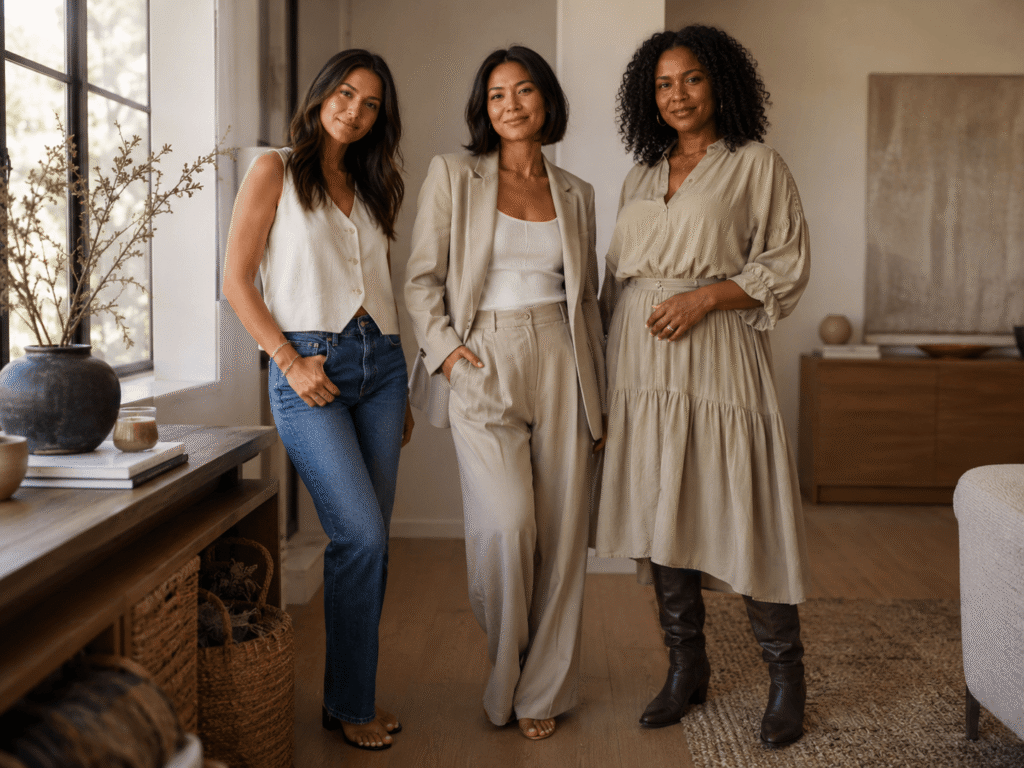
I’ve noticed that most women who feel stuck in a style rut aren’t really stuck because they don’t know what they like; they’re stuck because they don’t trust that they’re allowed to like something different now.
You can keep parts of your old style.
You can let other parts go.
You can be polished during the week and romantic at dinner.
You can love neutrals and still wear a bright red dress.
You can live in jeans and still care deeply about beauty.
Style doesn’t need to trap you.
It can move with you.
The goal isn’t to land on a perfect label.
The goal is to get dressed in a way that makes you feel more like yourself, more often.
That’s enough.
Start with your real week, choose your three words, study what you already wear, and let trends pass through your own filter before they earn a place in your wardrobe.
When your wardrobe begins to reflect your actual life instead of your old habits or someone else’s feed, getting dressed feels lighter.
Not flawless.
Lighter.
And as you keep refining your style, you may also enjoy reading my posts on [how to build a wardrobe you actually wear] and [simple outfit formulas for everyday style] once they’re published, because they’ll help you turn these ideas into real outfits without making everything complicated.

For now, pour another coffee, open that wardrobe again, and look at it with kinder eyes.
You’re not starting from nothing.
You’re starting from yourself, and that’s a very good place to begin.