


You did everything right. You moisturised last night, you slept seven hours, you’ve been drinking your water. And yet there you are, standing in the bathroom mirror at 7am, staring at skin that looks flat, grey, and somehow tired — even though you’re not. That specific frustration? I know it intimately.
If you’re wondering why does my skin look dull and how to fix it, you’re not alone, and more importantly, you’re not doing anything wrong. The real causes of dull skin are often hiding in plain sight — and none of them are solved by buying another serum. If your routine feels confusing or inconsistent, start with my guide on how to build a skincare routine from scratch.
The Real Causes of Dull Skin
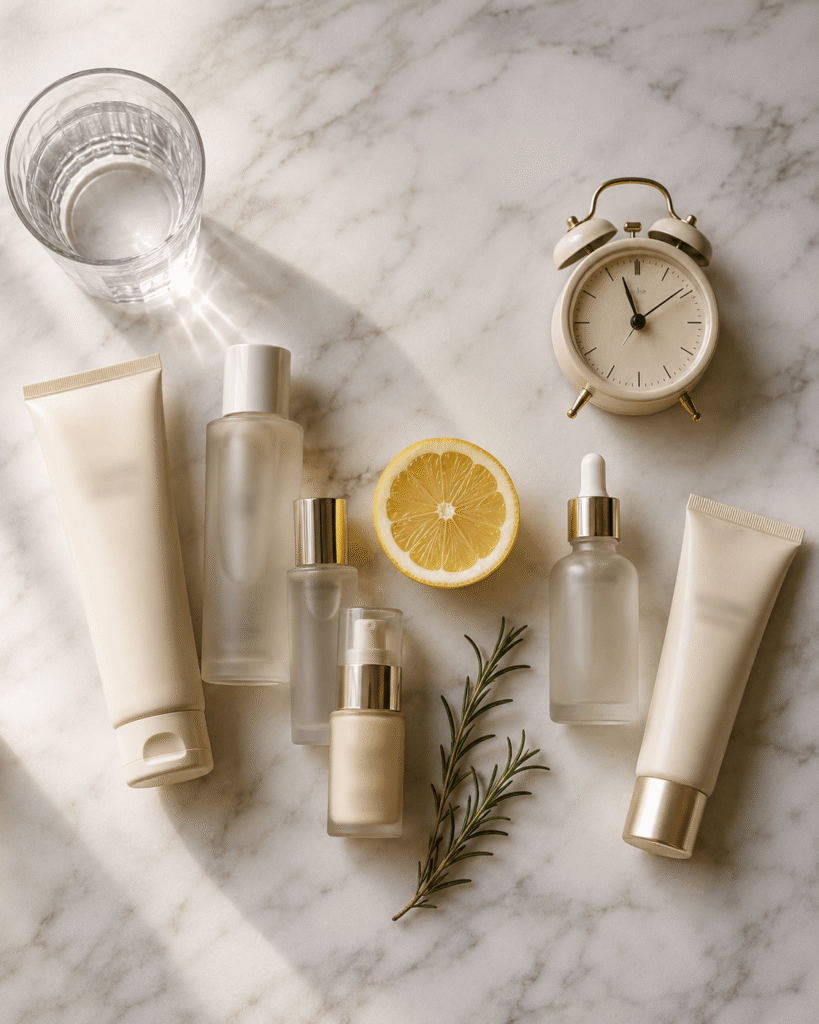
Understanding the actual dull skin causes changes everything, because once you know what’s creating the problem, you stop throwing random products at it and start making real progress.
Dehydration (internal). Your skin is an organ, and like every other organ, it needs water to function. When you’re even mildly dehydrated, your skin cells can’t maintain their plumpness and light-reflectivity. The result is skin that looks flat and lacks that healthy, almost luminous quality — even if it doesn’t feel dry to the touch.
Product build-up. This one surprises people. If you’ve been layering serums, SPF, primers, and moisturisers without fully cleansing them away each evening, residue accumulates on the skin’s surface. That layer scatters light rather than reflecting it, which is why skin can look dull even when you have a solid routine.
Over-cleansing. Washing your face twice a day with a strong, stripping cleanser disrupts your skin barrier. A compromised barrier means your skin spends its energy on damage repair rather than producing the lipids and moisture it needs to look healthy. The surface becomes rough and uneven — and rough texture never catches light the way smooth skin does.
Lack of exfoliation. Your skin naturally sheds dead cells in a cycle that takes roughly 28–40 days (longer as you age). But when that process slows or cells don’t shed evenly, they pile up on the surface and create that thick, grey, lacklustre appearance. Regular, gentle exfoliation is one of the simplest ways to restore glow.
Poor sleep. During deep sleep, your body increases blood flow to the skin and produces growth hormone, which supports cell repair. Poor sleep or broken sleep disrupts this — reducing circulation (which causes that grey, dull pallour) and slowing the rate at which your skin renews itself overnight.
UV damage accumulation. Sun damage doesn’t just show up as spots and wrinkles — it shows up as dullness first. UV exposure breaks down collagen, thickens the outer layer of skin, and causes uneven melanin distribution. Over time, this creates a flat, rough, uneven surface that reflects light poorly. This is one of the slowest-developing but most significant contributors to a consistently dull complexion.
Dehydration vs Dryness — Why This Difference Matters for Dull Skin
These two are often used interchangeably, but they’re different conditions with different causes — and confusing them means you could be treating the wrong thing entirely.
Dryness is a skin type. It means your skin doesn’t produce enough oil (sebum). Dry skin tends to feel tight, may flake, and lacks natural lubrication. The fix involves richer moisturisers and lipid-replenishing ingredients.
Dehydration is a skin condition — temporary, and something that can affect any skin type, including oily skin. Dehydrated skin lacks water, not oil. It may look dull and feel a little tacky or tight, but it can also produce excess oil as a compensatory response. The telltale sign? When you gently pinch the skin on your cheek and it takes a moment to spring back, or when fine lines appear almost instantly after cleansing.
I had noticeably dull skin for two years before I realised the cause had nothing to do with my products — it was dehydration. I had oily skin, so I assumed I didn’t need to focus on hydration. I was wrong. I was stripping my skin with harsh cleansers, using virtually no hydrating ingredients, and wondering why my face looked grey by midday.
This distinction is one of the most important answers to the question of why does my skin look dull how to fix it — because treating dryness when you’re actually dehydrated (or vice versa) will never give you results.
What to ADD to Your Routine to Restore Glow
If you’ve been asking why does my skin look dull how to fix it, the answer often comes down to three key ingredients — here’s what they actually do, in plain terms.
Vitamin C. This is one of the most evidence-backed ingredients for brightening skin. It works in two ways: it inhibits the enzyme responsible for melanin production (which means it helps with dark spots and uneven tone over time), and it’s an antioxidant that protects skin from the environmental damage that causes dullness in the first place. Vitamin C is best used in the morning, under SPF. It can sting or irritate sensitive skin, so start with a lower concentration if you’re new to it.

AHAs and BHAs — chemical exfoliants. These sound intimidating but they’re actually gentler than physical scrubs when used correctly. AHAs (like glycolic acid and lactic acid) are water-soluble and work on the skin’s surface, dissolving the bonds between dead cells so they shed more evenly. Lactic acid is the gentler of the two and is a good starting point. BHAs (like salicylic acid) are oil-soluble, meaning they can get into pores — more relevant for those with congestion. For dullness specifically, an AHA used two to three times a week is often enough to see a meaningful change in skin texture and radiance within a few weeks.
Hyaluronic acid. This is a humectant — it draws water from the environment (and from the deeper layers of your skin) and holds it in the outer layers. This plumps skin cells, smooths texture, and helps skin reflect light more evenly. One important note: hyaluronic acid works best when applied to damp skin and sealed in with a moisturiser. Applied to completely dry skin in a dry environment, it can actually draw moisture out of your skin instead.
What to REMOVE From Your Routine
Sometimes the most important thing you can do is stop. These are the most common culprits that quietly dull your skin over time.
Harsh sulphate cleansers. Sulphates (sodium lauryl sulphate, sodium laureth sulphate) are the foaming agents that make cleansers lather dramatically. They’re highly effective at removing oil — so effective that they strip the skin’s natural barrier. If your skin feels tight or “squeaky clean” after washing, your cleanser is likely too harsh. Switching to a gentler, low-lather cleanser is one of the fastest improvements many people notice.
Over-exfoliating. More is not more when it comes to exfoliation. Using an AHA every day, combining multiple exfoliating products, or layering a physical scrub with a chemical exfoliant breaks down the skin barrier faster than it can repair itself. Barrier damage = dullness, sensitivity, and redness. Two to three times a week is enough for most people. If your skin stings, flushes easily, or feels raw after exfoliating, you’ve gone too far.
Heavy, pore-clogging products. Thick occlusive products have their place (particularly for very dry skin), but layering rich balms and heavy creams when your skin doesn’t need that level of occlusion can trap dead cells and sebum on the surface rather than allowing normal shedding. Pay attention to whether a product sits on your skin or absorbs — and choose formulas appropriate for your skin type.
Lifestyle Factors That Are Silently Dulling Your Skin
Skincare products can only do so much. These everyday habits have a surprising impact on how your skin looks.
Water intake. The connection between hydration and skin appearance is real but often overstated. Drinking water won’t cure dullness on its own, but chronic mild dehydration does affect skin cell function and plumpness. Aim for steady, consistent hydration across the day rather than drinking large amounts infrequently.
Sleep position. Sleeping face-down or on the same side every night compresses the skin for hours at a time, restricting blood flow and contributing to puffiness and flat-looking skin in the morning. Sleeping on your back (or on a smooth pillowcase that creates less friction) can make a noticeable difference.
Diet. Skin is a reflection of what’s happening internally. Diets high in refined sugar and processed foods can increase inflammation and glycation — a process that damages collagen and contributes to a dull, aged appearance. Prioritising omega-3 fatty acids (found in oily fish, flaxseed, walnuts), antioxidant-rich vegetables, and zinc (important for skin repair) supports your skin from the inside out.
The way you dress and how you feel about yourself also plays a role in how you care for your skin — read our guide on how to find your personal style to build confidence from the outside in.
Quick Fixes for Dull Skin You Can Do Tonight
While lasting change takes time, there are a few things you can do right now to give your skin an immediate boost.

Facial massage. Use clean hands or a facial roller and spend two to three minutes gently moving from the centre of your face outward and upward. This stimulates lymphatic drainage (which reduces puffiness) and increases blood circulation to the surface, giving skin a temporary but real flush of colour and life.
Cold water. At the end of your evening cleanse, splash your face with cold (not ice cold) water for 30 seconds. Cold causes blood vessels to temporarily constrict and then dilate, which gives skin a brief plumping effect and makes it look more awake. It also helps tighten the appearance of pores temporarily.
An overnight mask. A hydrating overnight mask (also called a sleeping mask) creates an occlusive barrier that prevents moisture loss while you sleep, allowing any hydrating ingredients underneath to work more effectively. The difference between skin that’s had a good overnight mask and skin that hasn’t can be visible by morning — not dramatically, but noticeably.
How Long Until You See a Difference?
Here’s the part nobody wants to hear — but it genuinely matters for setting expectations.
Real, lasting skin change takes a minimum of four to six weeks. That’s not a disclaimer; it’s biology. Your skin renews itself on a cycle that’s roughly 28 days in your twenties, and can slow to 40–45 days by your mid-forties. Ingredients like vitamin C and AHAs work by influencing that cycle — but they can’t speed up the biology itself. What you’re doing now is creating the conditions for healthier, brighter skin to emerge in the next cycle.
You might notice some quick wins in the first week or two — better hydration from hyaluronic acid, a temporary glow from exfoliating once, improved texture from switching cleansers. But the meaningful, structural change you’re looking for — more even tone, consistently reflective skin, fewer dull patches — takes consistent effort over four to six weeks minimum.
This is also why product-hopping is the enemy of results. If you switch products every two to three weeks looking for immediate feedback, you never give your skin long enough to actually respond. Choose a simplified, targeted routine, stick with it for six weeks, and then assess.
A few years ago, I committed to a consistent, stripped-back routine for eight weeks straight without changing a single product. It was the first time I’d given anything long enough to actually work — and by week six, I could see what all those shorter trials had been hiding.

Your skin is not broken. It’s not beyond help. It just needs the right inputs, given consistently, for long enough to make a real difference. Start simple, stay consistent, and trust the timeline.
For more guides like this, browse our full skin care archive.