


Standing in the skincare aisle can feel like being dropped into a language exam you didn’t study for.
There are shelves of cleansers, toners, serums, creams, acids, oils, masks, and SPF options staring back at you. Open the Sephora website and it gets even louder: trending ingredients, five-star reviews, viral routines, and people on TikTok telling you that everything you own is wrong.
If you’ve been searching for how to build a skincare routine from scratch, you don’t need another complicated routine with ten steps and words nobody uses in real life.
You need a clear starting point.
That’s what this is.
No fear tactics. No product names. No pressure to buy everything at once.
Just the basics, in the right order, with plain-English explanations so you can finally understand what your skin actually needs.
First — Know Your Skin Type
Before you build a routine, you need to know what kind of skin you’re working with.
Not perfectly. Just enough to stop buying products that fight against your face.
Here’s a simple self-test: wash your face with a gentle cleanser, don’t apply anything, and wait about an hour. Then look at how your skin feels and behaves.

Oily skin usually feels shiny all over, especially across the forehead, nose, and chin. You may notice makeup slipping off quickly or your skin looking greasy by midday.
Dry skin often feels tight, rough, or a little uncomfortable after washing. You might notice flaking, dullness, or makeup clinging to patches.
Combination skin means some areas are oily while others feel dry or normal. The classic sign is an oily T-zone with cheeks that feel balanced, tight, or dry.
Sensitive skin reacts easily. You may notice stinging, redness, itching, or discomfort when you try new products, fragrance, or strong ingredients.
Normal skin feels pretty balanced most days. It doesn’t get very oily, very dry, or easily irritated, though it still needs care and protection.
Your skin type can also change.
Weather, hormones, stress, travel, diet, age, and the products you use can all shift how your skin behaves. So don’t lock yourself into one label forever.
How to Build a Skincare Routine From Scratch: The 4 Steps Every Beginner Routine Needs
A beginner routine does not need twelve steps.
It needs four.
Cleanser. Toner. Moisturiser. SPF.
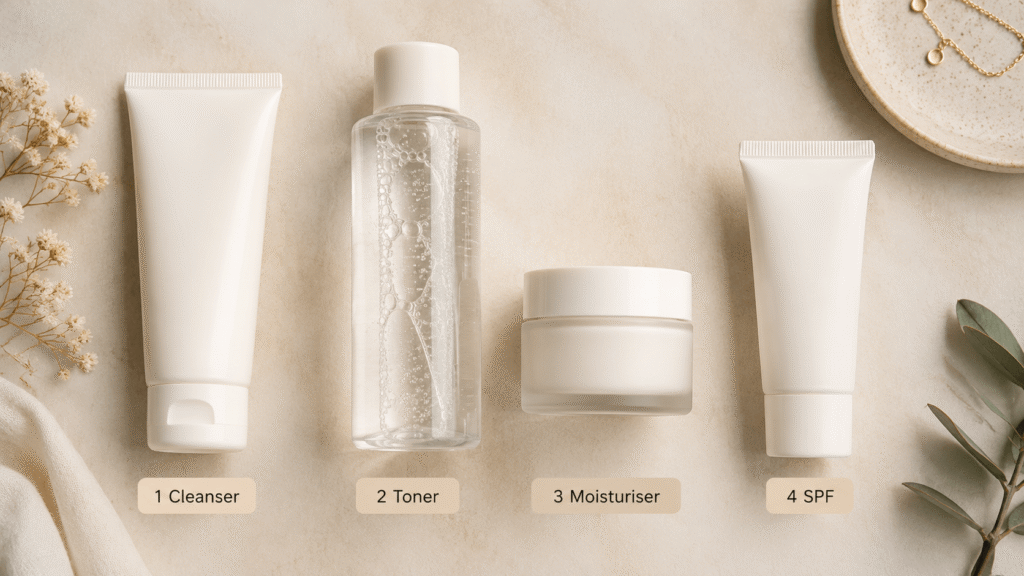
That’s the order because skincare works best when you move from removing what doesn’t belong, to adding light hydration, to sealing comfort in, to protecting your skin during the day.
I wasted two years applying products in the wrong order before someone explained this to me. I thought expensive products would fix everything, but my routine was messy, rushed, and working against itself.
Let’s make yours simpler from the start.
Step 1: Cleanser
Cleanser comes first because it removes sweat, oil, sunscreen, makeup, and the general film that builds up on your skin during the day.
Think of it like clearing the table before dinner. You can’t set down anything useful if the surface is still covered.
In the morning, many people only need a gentle cleanse or even a rinse if their skin is dry or sensitive. At night, cleansing matters more because your skin has been exposed to sunscreen, pollution, makeup, and oil all day.
This is where double cleansing can help.
Double cleansing means washing in two rounds at night: first to break down makeup and SPF, then again to actually clean the skin. You don’t have to do it every night, but it’s useful when you’ve worn sunscreen, foundation, or long-wear makeup.
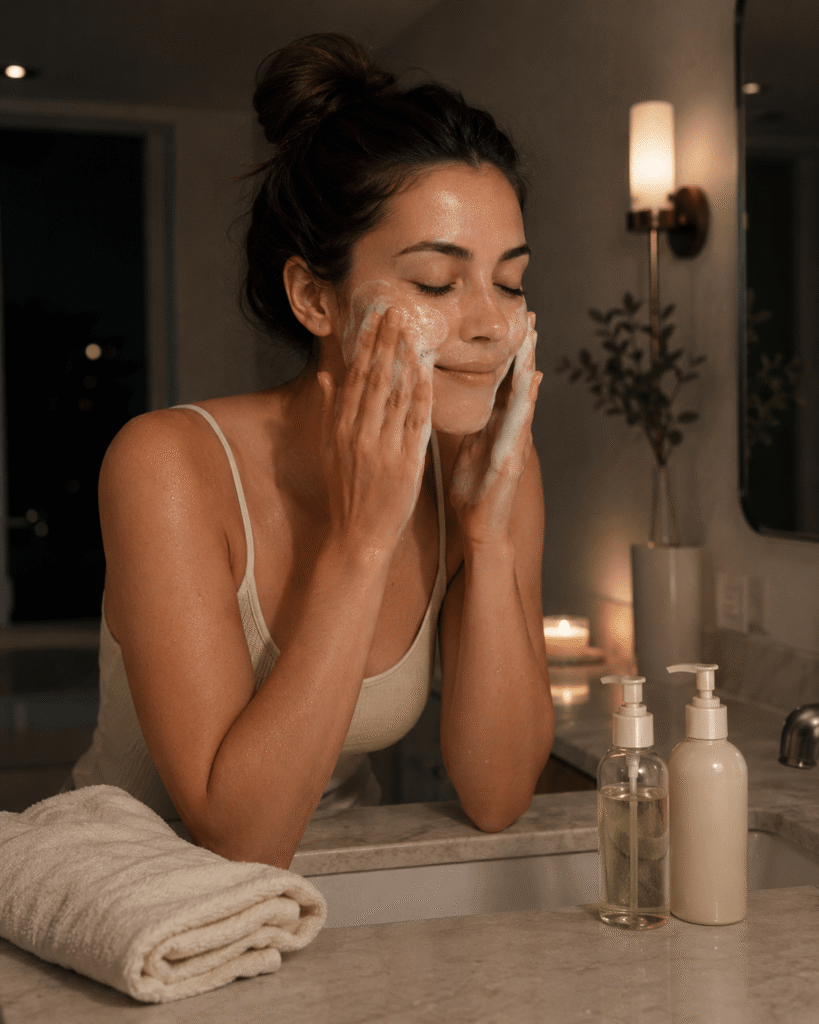
The order matters because cleanser prepares your skin for everything else.
If you apply toner or moisturiser on top of leftover sunscreen and oil, your routine won’t feel as fresh or work as evenly. Clean skin gives the next steps a fair chance.
Step 2: Toner
Toner is one of the most misunderstood skincare steps.
A lot of people think toner is supposed to burn, strip oil, or make your face feel squeaky clean. That old-school idea is why so many beginners either overuse toner or avoid it completely.
Modern toner is usually more about adding light hydration, comfort, or balance after cleansing.
Think of it as a thin, watery layer that helps your skin feel less tight before moisturiser. It’s not mandatory for everyone, but it can be helpful if your skin feels dry after washing or you like that extra cushion.
The order matters because toner is lighter than moisturiser.
Watery products go before creamy products so they don’t have to fight through a thicker layer. Apply it after cleansing, while your skin is clean and slightly receptive.
Don’t use toner as punishment for oily skin.
Oily skin doesn’t need to be attacked. It needs balance, because stripping it too much can make it feel stressed and even oilier later.
Step 3: Moisturiser
Moisturiser keeps your skin comfortable, soft, and supported.
It helps reduce that tight, thirsty feeling and gives your skin a flexible layer so it doesn’t feel bare after cleansing. Even if your skin is oily, you still need moisturiser.
Yes, really.
Oily skin can still be lacking water. When you skip moisturiser, your face may produce more oil to compensate, or it may feel greasy and tight at the same time.
The trick is not avoiding moisturiser.
It’s choosing a texture that suits your skin type. Lightweight textures often suit oily or combination skin, while richer textures often suit dry skin.
The order matters because moisturiser helps seal in the lighter layers before it.
If you use toner first, moisturiser helps hold that comfort in place. At night, moisturiser is usually your final step unless you’re using a specific treatment that belongs elsewhere.
Step 4: SPF
SPF is the morning-only step that protects your skin from daylight exposure.
It helps reduce the look of early ageing, dark marks, uneven tone, and sun-related damage over time. It’s also the step that makes the rest of your routine more worthwhile.
European women have treated SPF as non-negotiable year-round for decades — the US is only just catching up.
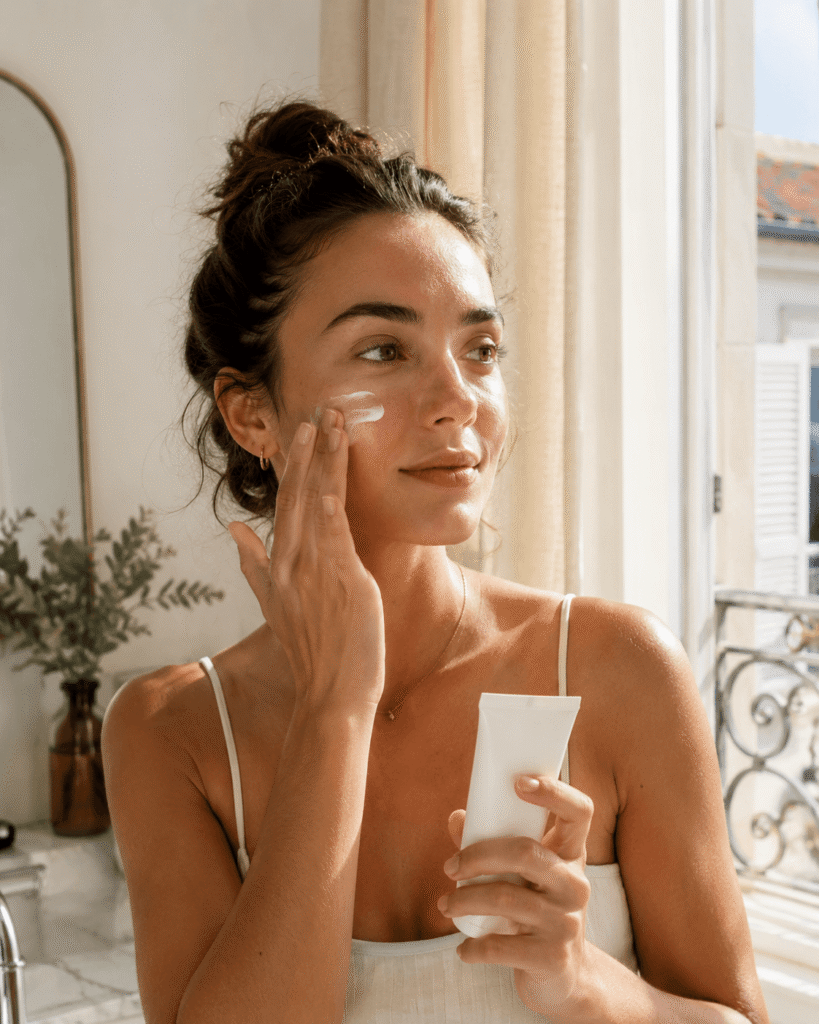
That doesn’t mean you need to panic or hide indoors. It means SPF belongs in your morning routine every day, not only on beach days.
SPF goes last in the morning because it needs to sit on top as your protective layer.
If you put moisturiser over it, you can disturb the coverage. So the morning order is cleanser, toner if using, moisturiser, then SPF.
At night, skip SPF.
Your evening routine is cleanser, toner if using, and moisturiser. This keeps things simple and stops you from wasting product where it isn’t needed.
Skincare Ingredients Explained Simply
Ingredients can make skincare feel intimidating fast.
The good news is that you don’t need to understand every ingredient on a label. Start with the big four beginners hear about most often.
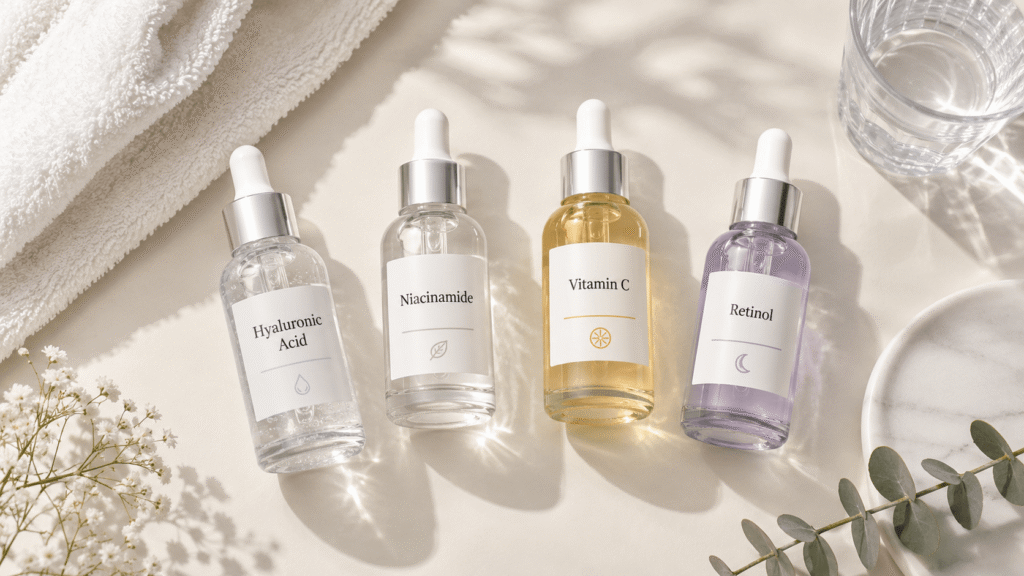
Hyaluronic Acid
Hyaluronic acid is a hydration ingredient.
It helps your skin hold onto water, which can make it feel plumper, softer, and less tight. Despite the word “acid,” it isn’t the scary kin d that exfoliates or peels.
It’s useful for dry, oily, combination, and normal skin.
Sensitive skin often likes it too, but always introduce anything new slowly. It works best when followed with moisturiser, because moisturiser helps keep that water feeling locked in.
Niacinamide
Niacinamide is a calming, balancing ingredient.
It can help with the look of uneven tone, visible pores, oiliness, and a stressed-looking skin barrier. In plain English, it’s the friend who helps your skin behave more consistently.
It’s popular because many skin types tolerate it well.
That said, more isn’t always better. If your skin feels irritated, simplify instead of adding more layers.
Vitamin C
Vitamin C is often used in morning routines to help skin look brighter and more even.
It pairs well with SPF because both are about protecting the look of your skin from daily environmental stress. Think of vitamin C as support, not a magic eraser.
Some people find vitamin C a little strong at first.
Start slowly and don’t layer it with every active ingredient you own. If your skin stings or feels unhappy, pause and go back to basics.
Retinol
Retinol is a night-time ingredient often used for texture, fine lines, and uneven-looking skin.
It encourages fresher-looking skin over time, but it can be drying or irritating when you rush it. Beginners should treat it with respect.
Use it slowly, not nightly at first.
Don’t combine it with lots of other strong ingredients in the same routine. And always use SPF in the morning, because retinol and sun care go hand in hand.
The Mistakes Almost Every Beginner Makes
This is the section I wish someone had handed me at the start.
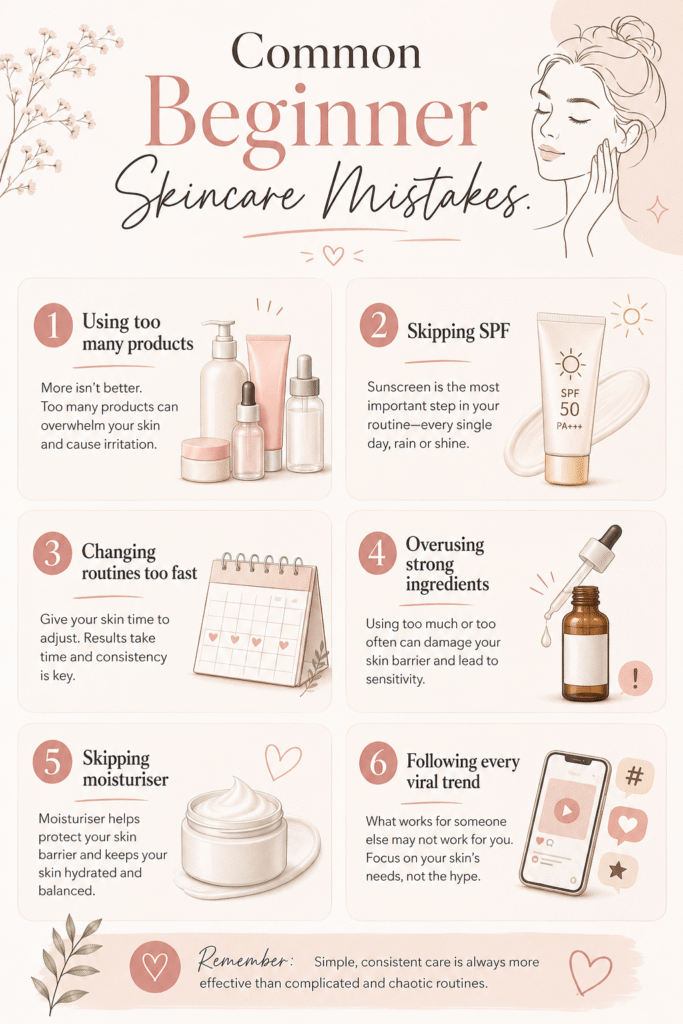
Because most beginner skincare mistakes aren’t dramatic. They’re small, repeated habits that quietly make your routine more confusing.
Using too many new products at once.
When you start five things in one week, you won’t know what helped or what caused a problem. Add one new product at a time and give your skin space to respond.
Changing routines every few days.
TikTok makes it tempting to restart constantly. But skin needs consistency before you can judge whether something works.
Skipping SPF because you’re indoors.
Daylight still reaches your skin through windows. A simple morning SPF habit is easier than trying to undo damage later.
Using strong ingredients too often.
Retinol, exfoliating acids, and strong brightening products can be useful, but beginners often use them like a daily race. Your skin doesn’t need to be pushed that hard.
Thinking oily skin doesn’t need moisturiser.
Honestly, the biggest mistake I see beginners make is trying to dry out oily skin instead of supporting it. Oily skin usually looks better when it’s gently hydrated, not stripped.
Buying products because they went viral.
A product can be popular and still be wrong for your skin. Trends don’t know your skin type, your climate, your budget, or your current routine.
Expecting one product to fix everything.
Skincare is not a single hero moment. It’s a set of small habits repeated often enough to matter.
Washing your face too aggressively.
Scrubbing harder doesn’t make skin cleaner in a better way. It can leave your face feeling tight, irritated, and more reactive.
Ignoring your neck.
Your neck gets the same daylight exposure as your face. Bring moisturiser and SPF down instead of stopping at your jawline.
Layering products without understanding texture.
A simple rule helps: thin, watery layers first, thicker creamy layers after. SPF always goes last in the morning.
Quitting too soon.
If you expect visible change in three days, you’ll keep jumping from product to product. Most skin changes take weeks, not a weekend.
AM and PM Beginner Routine Example
Here’s what a simple beginner routine can look like without naming products.
Morning:
Cleanser or rinse. Toner if your skin likes it. Moisturiser. SPF.
Evening:
Cleanser. Double cleanse if you wore makeup or sunscreen. Toner if using. Moisturiser.
That’s enough to start.
You can add ingredients later, once your skin is calm and your routine feels automatic. The best beginner routine is the one you’ll actually repeat.
For oily skin, keep textures light and don’t skip hydration.
For dry skin, focus on comfort and avoid anything that leaves your face feeling tight. For combination skin, you may need lighter layers through the T-zone and more comfort on the cheeks.
For sensitive skin, boring is beautiful.
Fewer steps, fewer fragrances, and slower changes are your friends. For normal skin, focus on consistency and protection rather than chasing problems you don’t have.
How Long Before You See Results?
This is where honesty matters.
Skin usually takes 4–6 weeks to show noticeable change from a consistent routine. Some comfort changes can happen faster, but bigger changes take time.
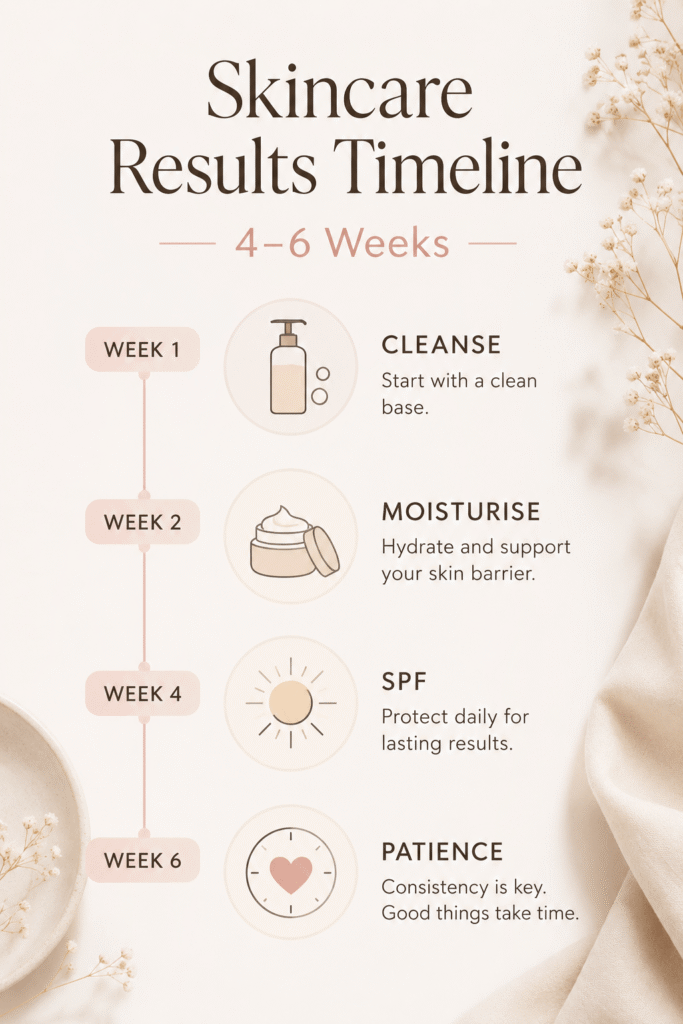
Cleansing and moisturising may make your skin feel better within days.
Uneven tone, texture, dryness patterns, and dullness usually need several weeks. Retinol can take longer, especially because you should introduce it slowly.
In my experience, the routines that work best are almost always the least dramatic ones. They’re the routines you can do when you’re tired, busy, travelling, or not in the mood.
Give your skin a month before you judge everything.
Take photos in the same lighting once a week if you’re tracking changes. Don’t inspect your face under harsh bathroom lights every night and call that progress.
Your skin doesn’t need perfection.
It needs patience, protection, and a routine that makes sense.
Start with the four steps. Learn your skin type. Add ingredients slowly.
And when my beauty product roundup posts are live, you’ll be able to use this guide to shop smarter instead of guessing your way through another crowded aisle.