


Picture this: it’s 10:47 p.m. and you are doing the shuffle of shame down a perfectly respectable street — shoes dangling from two fingers, bare feet on cold pavement, mascara slightly smudged from the effort of not crying for the last forty minutes. The heels were stunning. Genuinely, jaw-droppingly beautiful. The kind of shoes that made three strangers compliment you before you’d even reached the bar. But somewhere between the second cocktail and the Uber home, your feet staged a full rebellion, and now you’re the woman walking barefoot past a kebab shop at midnight wondering if beauty is really worth it.
Or maybe you’ve been on the other side. The sensible days. The days you wore your most supportive, most practical, most responsible shoes and felt slightly invisible — like you’d dressed for a waiting room, not your actual life. Also not great.
You deserve better than both of those outcomes. And here’s the thing: learning how to choose comfortable stylish shoes is genuinely a learnable skill. It’s not luck, it’s not about having unusual feet, and it doesn’t require you to spend a fortune. It just requires knowing what to look for — and ignoring a few persistent myths that the shoe industry would very much prefer you kept believing.
The Anatomy of a Comfortable Shoe
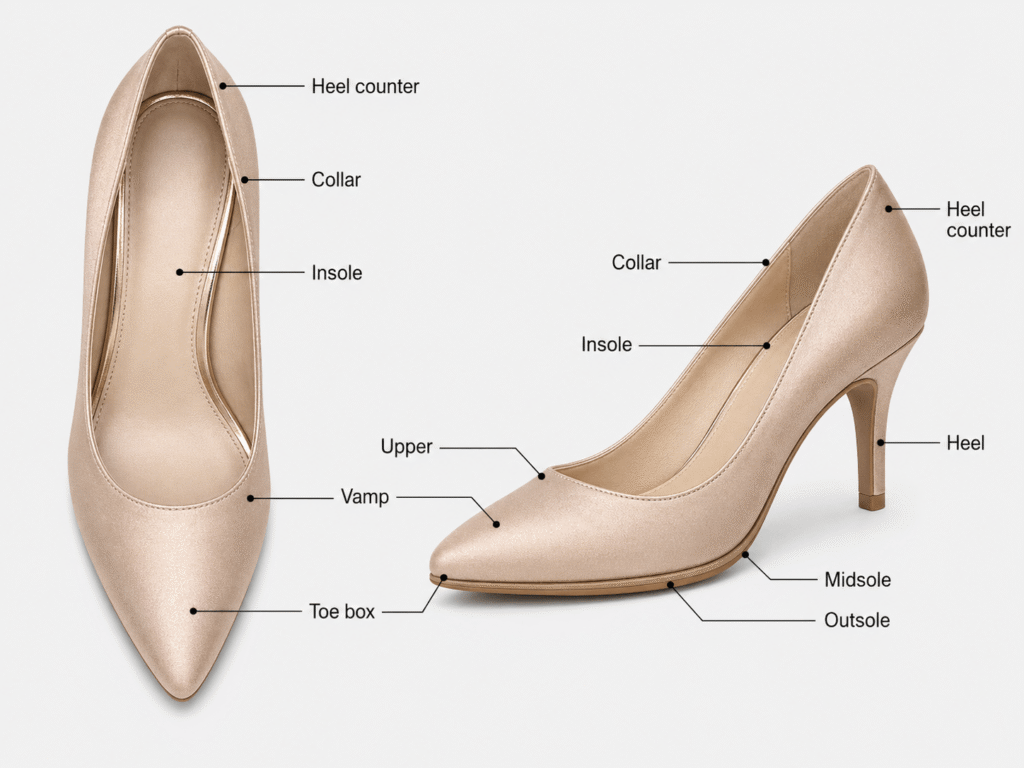
Before you can shop smarter, you need to know what’s actually inside a shoe that makes the difference between floating through your day and wincing by lunchtime.
Toe box. This is the front of the shoe that houses your toes, and it needs to be wide enough that your toes can lie flat without being squashed sideways. A toe box that’s too narrow forces your toes into an unnatural position, which leads to everything from blisters to long-term joint problems — pointed-toe shoes aren’t automatically painful, but they need depth and width beneath that point, not just at the tip.
Heel counter. The heel counter is the rigid cup at the back of the shoe that wraps around your heel. A firm, well-structured heel counter stabilises your foot and prevents your heel from rolling inward or sliding around — if you can crush the back of a shoe with two fingers before you’ve even worn it, it’s going to offer you very little support.
Arch support. The arch of your foot acts like a spring, absorbing shock with every step, and a shoe with a flat, unsupported insole forces that work onto your tendons and muscles instead. Good arch support doesn’t have to be clinical-looking — it’s built into the midsole of many well-made shoes and you can feel it when you press your thumb into the footbed.
Sole. The outsole (the part touching the ground) should flex at the ball of your foot — not in the middle, not at the heel. Pick up a shoe and try to bend it: if it bends easily at the arch, that’s bad news for your midfoot support; if it’s completely rigid everywhere, it won’t work with your foot’s natural movement.
Heel height. More on this in a moment, but as a baseline: every centimetre of heel height shifts more of your body weight onto the ball of your foot. Under 4cm is where most people can walk comfortably for extended periods; above 7cm is where the real biomechanical compromise begins.
The Truth About Heel Height
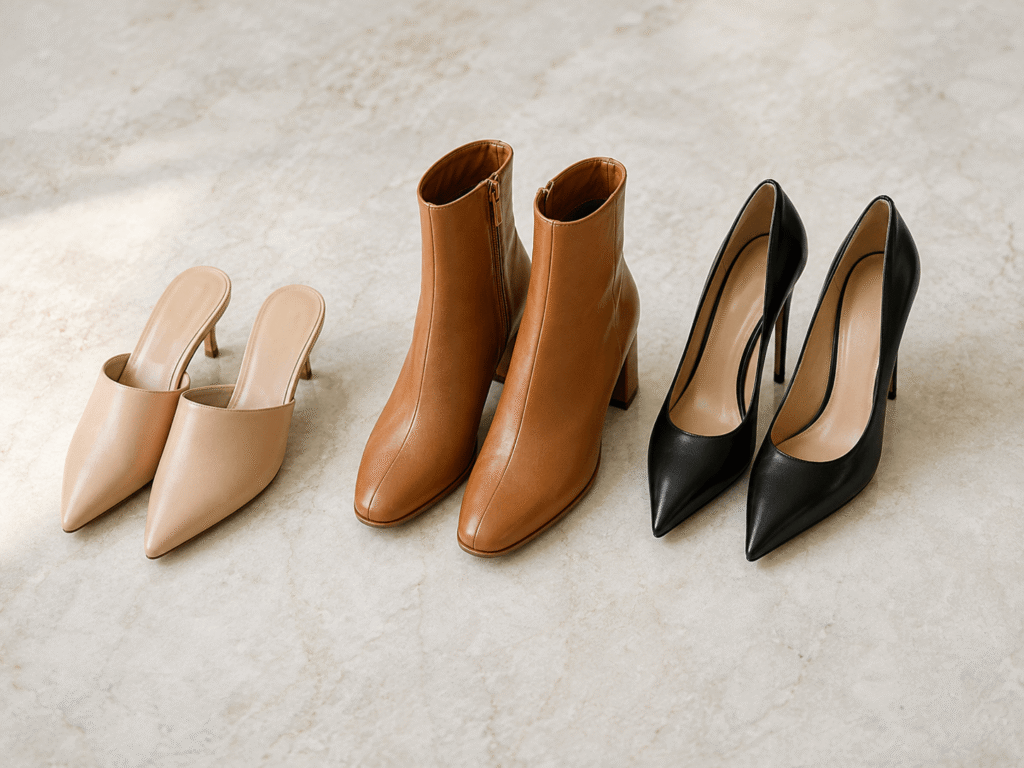
Let’s be honest about what different heel heights actually do to your feet, because “wear what you love” is lovely advice right up until you can’t walk for three days.
Kitten heels (under 4cm) are genuinely the most underrated heel category. They change the line of a look — elongating the leg, adding a little formality — without significantly altering your gait or loading the front of your foot. For women who spend long days on their feet but want something more polished than a flat, a kitten heel is the most practical compromise available. The reputation for being frumpy is outdated; modern kitten heel designs are genuinely chic.
Block heels (4–7cm) distribute your weight across a wider surface area than a stiletto of the same height, which means significantly less pressure per square centimetre at the ball of your foot. A 5cm block heel on a well-constructed shoe can be genuinely comfortable for a full working day — it’s the shape of the heel, not just the height, that determines how much strain you’re under.
Stilettos (7cm+) concentrate all your weight onto a tiny point, which creates pressure that radiates up through the ankle, knee, and lower back. This doesn’t mean you should never wear them — it means you should wear them with clear eyes, for occasions where you’ll be sitting more than standing, and never for more than a few hours. I wore a pair of 10cm stilettos to an all-day outdoor festival once. I’m not proud. My left knee complained about it for a month.
Materials — Why Leather Outperforms Synthetic Every Time
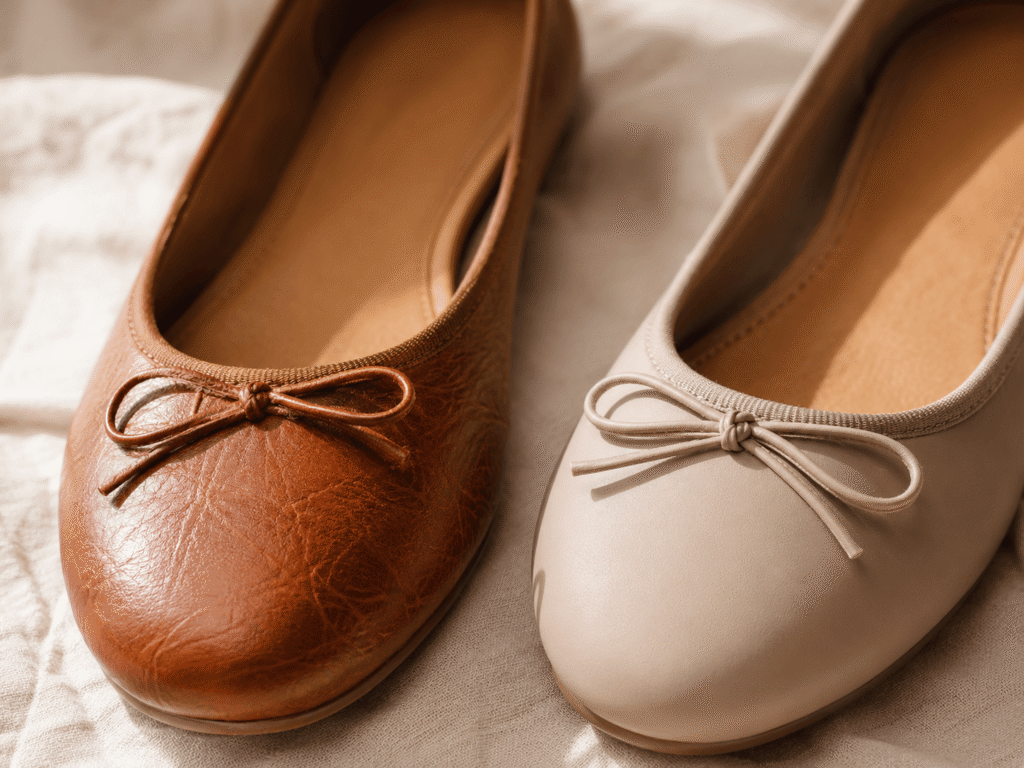
Genuine leather is not just a price point flex. It has physical properties that synthetic materials struggle to match, and those properties directly affect how your foot feels after four hours of wear.
Leather breathes. It allows air circulation, which means your foot stays drier and cooler — and moisture is one of the primary causes of blisters. Synthetic uppers trap heat and humidity against your skin, which not only causes discomfort but softens and weakens the skin, making it more vulnerable to friction damage.
Leather moulds. Over time, real leather — particularly in unlined shoes — will conform to the shape of your specific foot. This is why a good leather shoe that fits well at purchase will often feel better after a few wears. Synthetic materials don’t have this property; they retain their original shape regardless of what your foot is doing inside them.
Suede, nubuck, and other natural-finish leathers share most of these properties and are worth prioritising over microfibre alternatives, even when the latter look similar at first glance. Turn the shoe over and check the label if you’re unsure — manufacturers are required to disclose material composition, and knowing what you’re buying is worth the thirty seconds it takes.
The Break-In Myth — Which Shoes Actually Need It and Which Don’t
Here’s something the shoe industry would rather you didn’t think about too hard: a well-made shoe in the right size should not require you to suffer for days before it becomes wearable. The “break-in period” is partly real and partly a rationalisation for buying shoes that don’t fit properly.
What is real: leather shoes do soften and flex slightly with wear. A stiff leather upper will become more supple over the first few wears, and a leather insole will compress and conform very slightly to your foot. This process typically takes two to five wears and should feel like gradual adjustment, not active pain.
What is a myth: that blisters, bleeding, or genuine foot pain during a break-in period are normal and worth pushing through. They are not. Pain during wear is your foot telling you that something about the fit or construction is wrong — the toe box is too narrow, the heel counter is rubbing at the wrong point, the shoe is half a size too small. No amount of breaking in will fix a fundamental fit problem.
Canvas and fabric shoes generally need no break-in at all. Rubber-soled shoes, trainers, and soft-lined flats should also be comfortable from the first wear. If they’re not, that’s a fit issue, not a patience issue.
How to Size Shoes Correctly
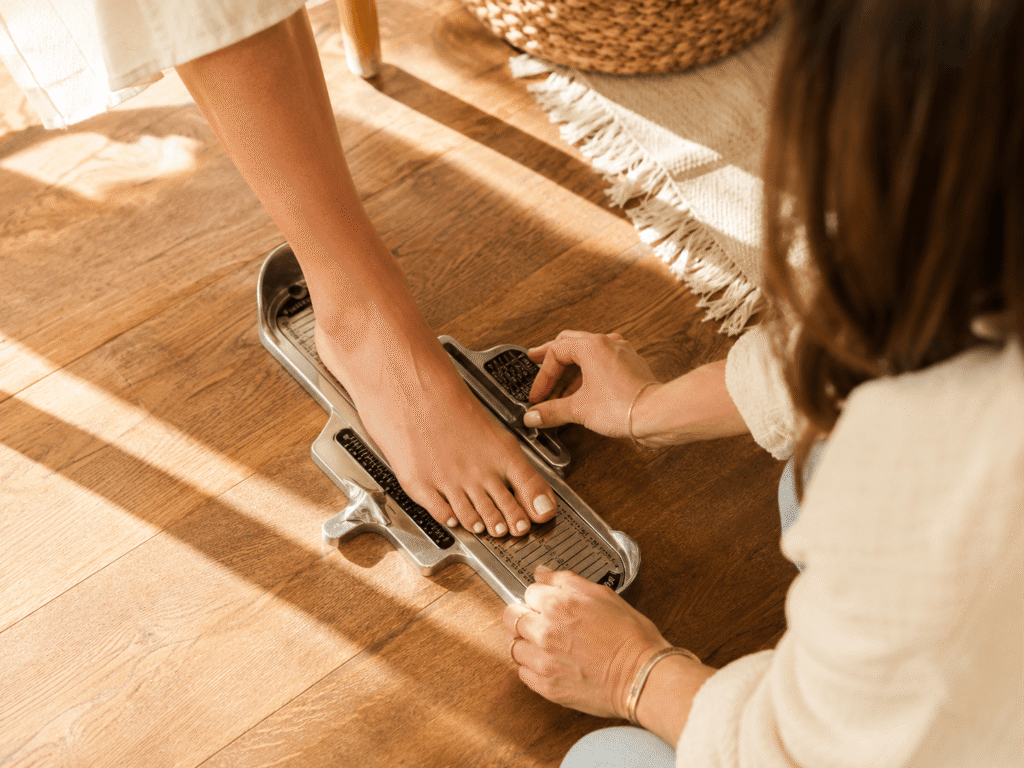
This might be the single most actionable thing in this entire article, so please take note: try shoes in the afternoon.
Your feet swell throughout the day. In the morning, after a night of lying down with minimal circulation pressure, your feet are at their smallest. By mid-afternoon, after hours of walking, standing, and gravity doing its work, they can be up to a full size larger. If you try shoes in the morning and they fit perfectly, they will almost certainly feel tight by evening — which is exactly when you most need them to be comfortable.
A note for those navigating the international sizing maze: UK, US, and EU sizes are not interchangeable in any consistent way, and shoe sizing is not standardised across brands even within the same country. A UK 6 is a US 8.5 and an EU 39 — in theory. In practice, a brand cutting shoes in a Portuguese factory with Italian lasts will fit differently than a brand cutting shoes in China to US specifications. Always try before you buy if you can, and when ordering online, measure your foot in centimetres and compare against the brand’s specific size chart rather than converting from a size you know in another system.
Boots vs heels sizing: most people need to size up half a size in ankle boots compared to heeled shoes, because boots have a more enclosed fit around the ankle and instep that reduces the natural give you’d get in a lower-cut shoe. If your heeled shoes are a UK 6, start your ankle boot search at a UK 6.5.
When to Size Up and When to Size Down
The general rule: when in doubt, size up — never size down.
A shoe that’s slightly too large can be adjusted with an insole, a heel grip, or toe cushions. A shoe that’s too small cannot be made larger, and wearing shoes that are even a half size too small for a full day is one of the fastest routes to blisters, black toenails, and the kind of foot pain that makes you dread getting dressed.
Size up when: you’re between sizes and unsure; you’re buying shoes you’ll wear with thick socks or tights; you’re buying boots; your feet are wider than average; you know from experience that a brand runs small.
Size down (only by a half size maximum) when: you’re buying a sandal or mule where the shoe has no back and needs to stay on your foot through foot tension alone, or when a brand notoriously runs large and you’ve confirmed this from other buyers.
One final note for anyone shopping in the UK specifically: British cobblestones and uneven pavements are genuinely brutal on footwear in a way that American readers used to wide, smooth sidewalks may not fully appreciate. A heel that’s comfortable on a polished floor becomes a liability on wet cobblestones in Edinburgh or a Victorian terrace street in Bristol. Factor in your actual terrain when you’re deciding on heel height and sole grip — this is a real comfort variable, not a minor detail.
The Honest Summary: How to Choose Comfortable Stylish Shoes
Comfortable, stylish shoes are not a unicorn. They exist, in every price range, in every aesthetic category — but finding them requires you to slow down, try things at the right time of day, handle the shoe before you put it on, and stop hoping that pain is a you-problem that will resolve with enough willpower.
Check the toe box. Feel the heel counter. Press your thumb into the arch. Try shoes in the afternoon. Buy leather when you can. Know your actual size in centimetres, not just the number on your usual box. And remember that a kitten heel or a well-constructed block heel will take you further — literally — than a stiletto that looks magnificent for ninety minutes before becoming unwearable.

Your feet carry you through your entire life. They deserve shoes that treat them accordingly.